In industrial production and various processing procedures, chillers have become indispensable temperature control equipment. Whether in injection molding, laser cutting, printing and packaging, or in industries such as food and pharmaceuticals, a stable cooling system directly affects product quality and production efficiency. Enterprises of different scales and production processes naturally have different requirements for chillers. Generally, chillers are categorized into small chillers and large chillers according to their cooling capacity and equipment size. So, what are the differences between the two? How should companies choose in practical applications? This article provides a detailed analysis.
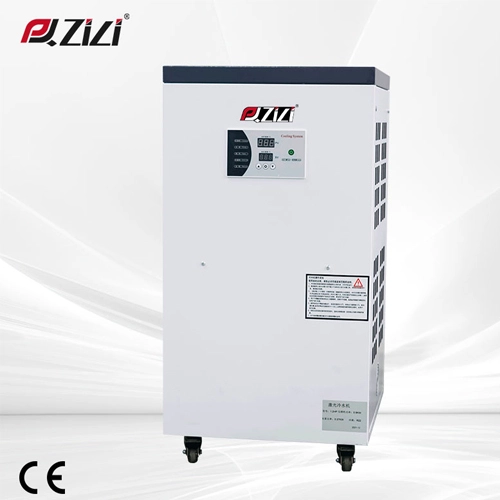
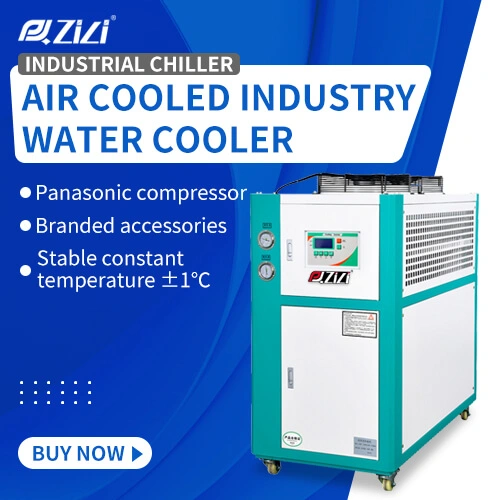
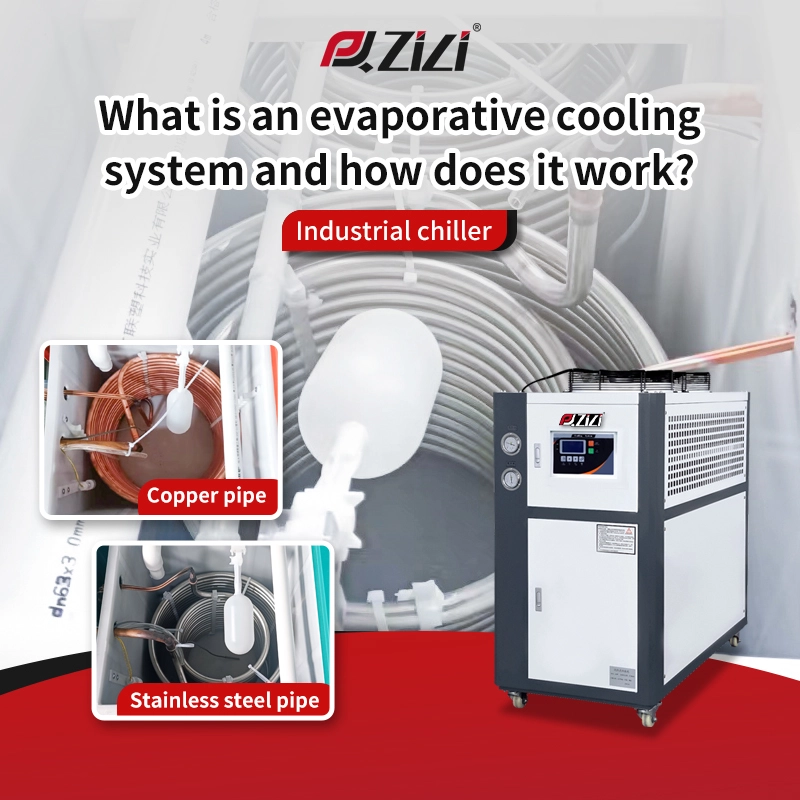
Small chillers usually refer to compact refrigeration units with a cooling capacity of 0.5HP–20HP. Most models are designed as small air cooled chiller systems, featuring a compact structure, easy installation, and a space-saving footprint.
Compact size, easy installation
Small chillers are typically designed as integrated units, eliminating the need for an additional cooling tower or water pump system. Once installed, they can be connected directly to power and piping, with low installation costs.
Relatively lower price
Due to their limited cooling capacity, the manufacturing cost of small chillers is not high, making them suitable for SMEs and single-machine cooling requirements.
High cooling precision
Small chillers are often used for temperature-sensitive equipment, such as laser cutting machines, laboratory instruments, and medical or cosmetic devices. They can achieve precise temperature control of ±0.5℃ or even higher accuracy.
Flexible applications
They are commonly found in small injection molding machines, laser systems, printing machines, and electronic component cooling. For single equipment or smaller-scale factories, small chillers are both economical and efficient.
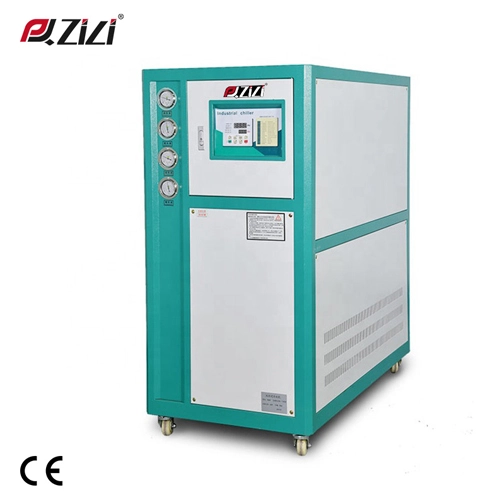
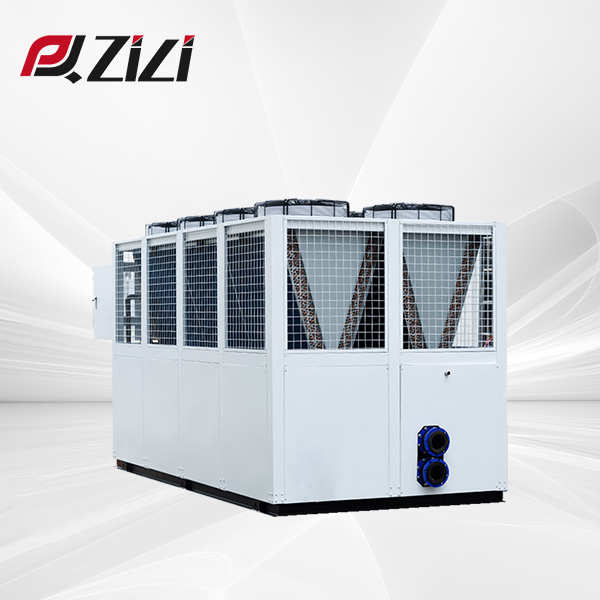
Large chillers usually refer to models with a cooling capacity of 30HP or more, typically in the form of screw chillers or centrifugal chillers, and often paired with water-cooling systems and cooling towers.
Large cooling capacity, suitable for centralized cooling
Large chillers can provide cooling capacities ranging from hundreds to thousands of kilowatts, capable of supplying chilled water to multiple production lines and large equipment simultaneously, meeting the needs of large-scale factories.
Higher energy efficiency
Equipped with screw or centrifugal compressors, large chillers show superior energy-saving performance during long-term operation, making them ideal for high-load, 24/7 production.
Complex systems requiring integration
Large chillers generally need to work in conjunction with cooling towers, pumps, and piping systems. Although the initial investment is higher, long-term operational costs are lower.
High degree of automation
Modern large chillers are typically equipped with PLC control systems and touchscreen operation panels, enabling remote monitoring and automated adjustments, reducing the need for manual intervention.
Typical applications
Large-scale plastic and rubber production lines, chemical plants, large-scale food and beverage production, pharmaceutical workshops, data centers, and central air conditioning systems.
Cooling capacity: Small chillers typically range from 0.5HP to 20HP, while large chillers can reach dozens to thousands of HP, suitable for centralized cooling.
Installation: Small chillers are usually integrated units, while large chillers require cooling towers, pumps, and complex piping systems.
Cost: Small chillers have a lower initial investment, ideal for SMEs with limited budgets. Large chillers require higher upfront costs but provide lower long-term operating expenses.
Application scope: Small chillers are used in laboratories, laser equipment, and small injection molding machines. Large chillers are applied in food and beverage production, chemical plants, rubber manufacturing, and central air-conditioning systems.
Energy efficiency & maintenance: Small chillers are flexible and efficient in short-term use, while large chillers are more advantageous in long-term, high-load operations, though they require professional maintenance.
For SMEs or single-machine setups
If the factory is relatively small and mainly operates small injection molding machines, laser cutters, or printing machines, small air-cooled chillers are recommended. They are easy to install and save space.
For large production lines or centralized cooling
If cooling is required for multiple machines or an entire workshop, such as in food and beverage production or chemical workshops, large water-cooled screw chillers are more suitable due to their stable operation and strong energy-saving performance.
For industries with strict temperature requirements
For medical, laboratory, or precision electronics industries, high-precision small chillers are recommended to ensure stable temperature control.
For high-load, long-term operation
Factories operating 24/7 benefit more from large chillers, especially screw chillers, which are durable, reliable, and cost-efficient in the long run.
Both small and large chillers have their unique advantages, largely depending on the scale of production and process requirements. Small chillers are flexible and economical, suitable for SMEs and single-machine cooling. Large chillers deliver higher cooling capacity and efficiency, making them the first choice for large-scale factories and centralized cooling systems.
When selecting a chiller, enterprises should consider actual production conditions, budget, and future expansion plans to choose the most appropriate system. Regardless of whether a small or large chiller is selected, choosing a reliable manufacturer is the key to ensuring long-term stability. Only by ensuring quality from the source can production efficiency and energy-saving performance be guaranteed.
 +86-178-1894-1386
  taylor_jiao@pqzili.com