IN/220V/50hz
5℃~35℃
Capillary Tube
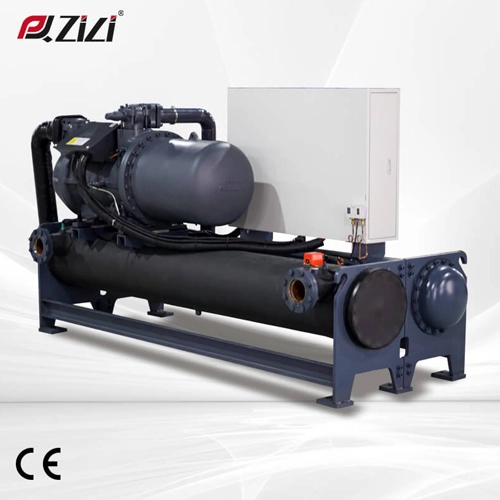
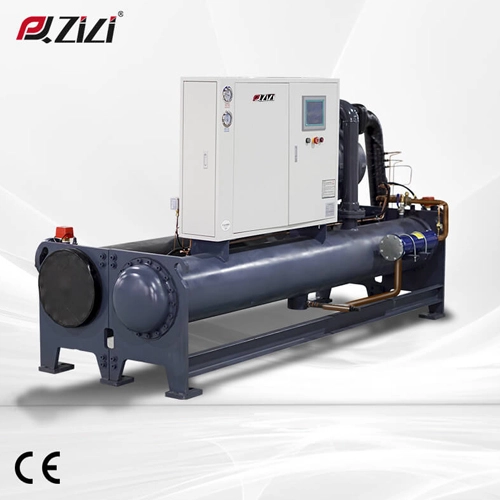
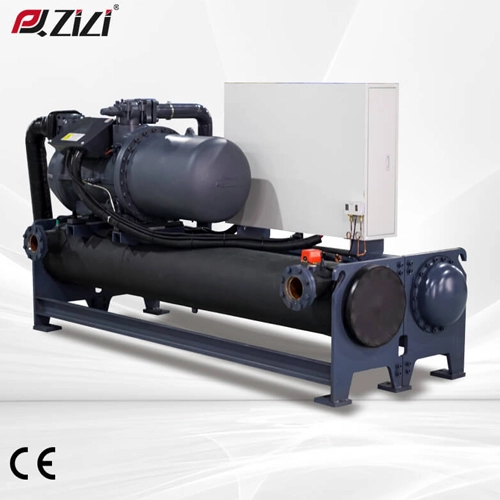
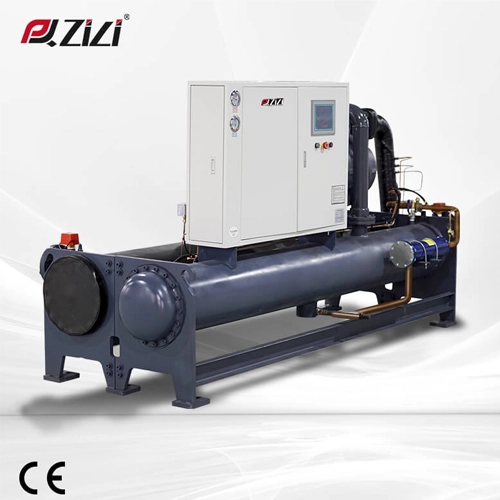
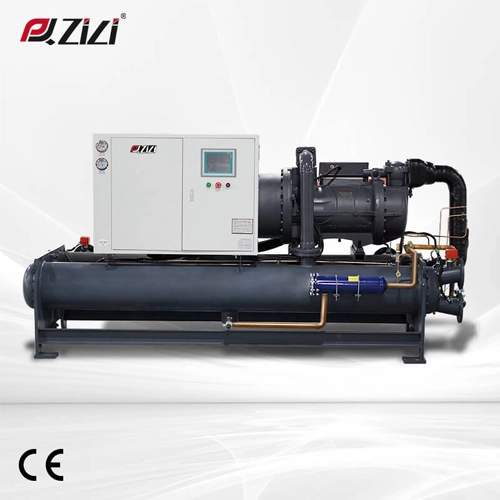
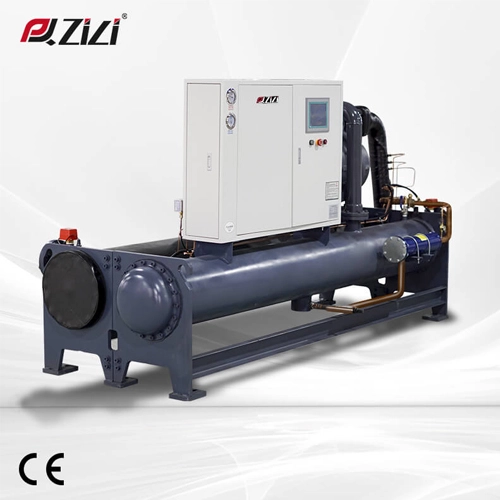
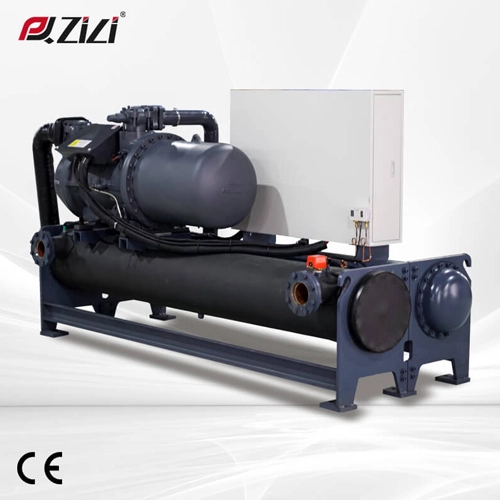
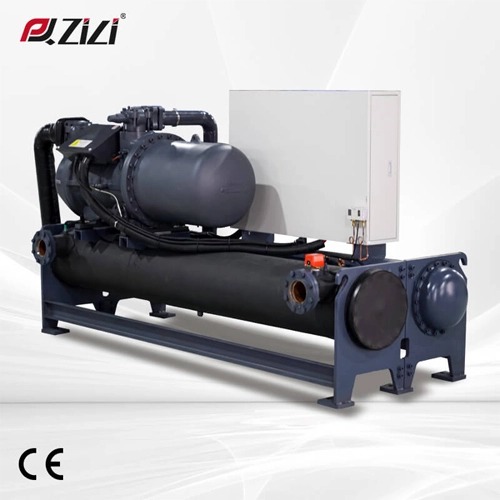
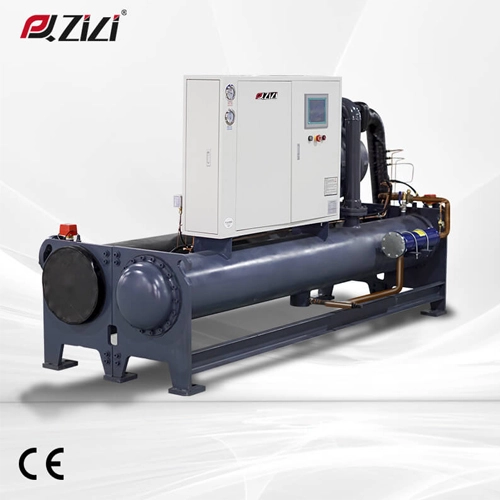
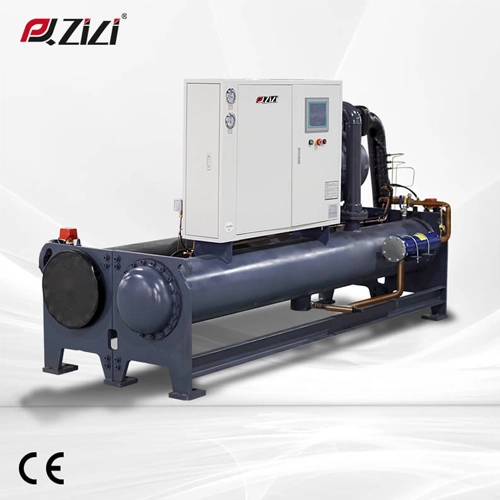
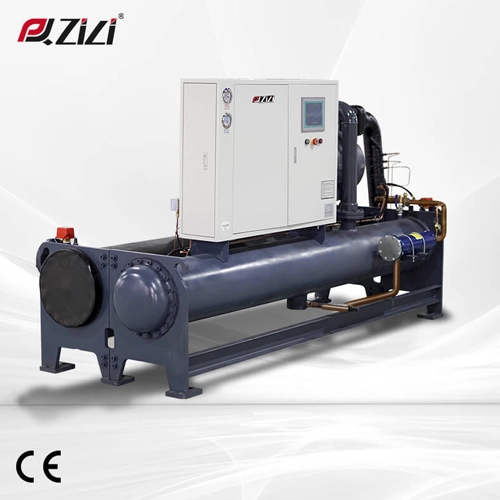
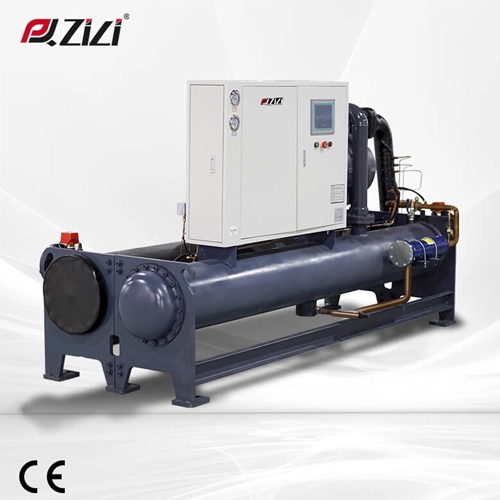
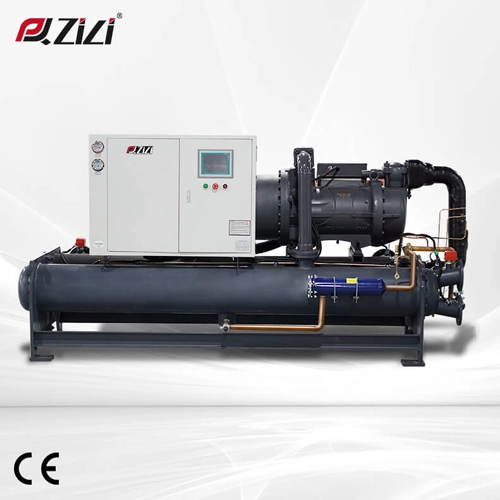
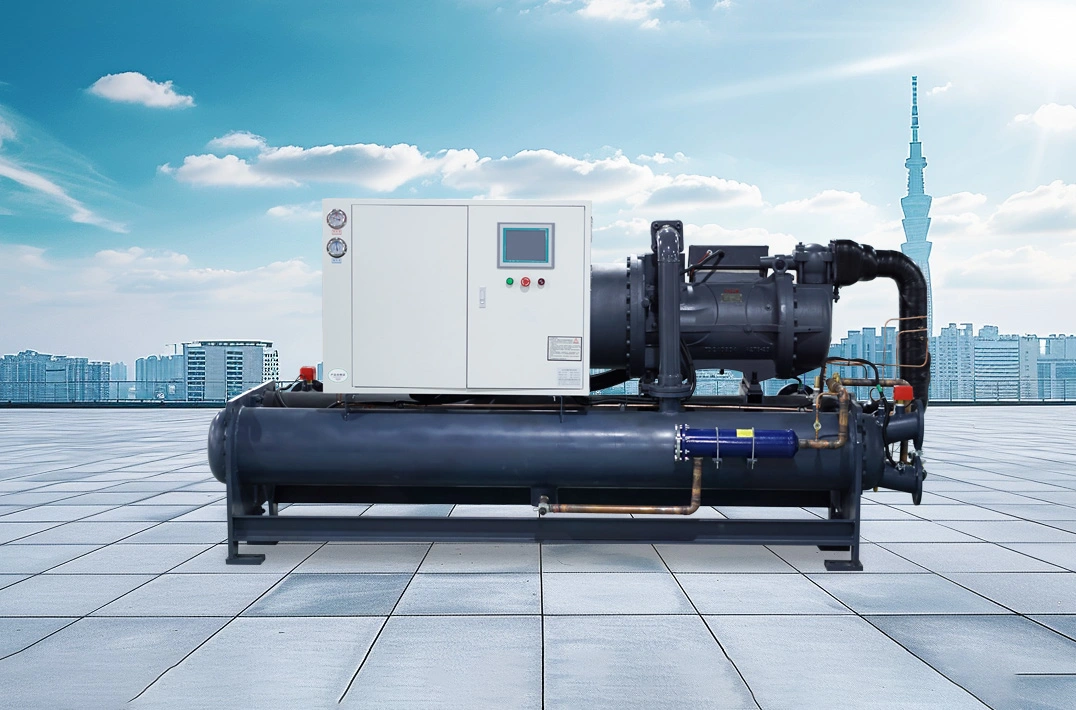
The water-cooled screw chiller circulates a refrigerant through a closed vapor-compression cycle in order to reject heat from an external cooling tower loop and absorb heat from an internal building or process fluid. The interaction between temperature, pressure, and refrigerant phase transitions is crucial to the entire process.
Water-cooled screw chillers are choosed for large-scale commercial and industrial applications due to their remarkable energy efficiency, long lifespan, and remarkably silent operation. Compared to air-cooled alternatives, they offer steady cooling capacities and need less installation area because they use water to reject heat.
| Feature | Water Cooled |
| Efficiency | Higher |
| Operating Cost | Lower |
| Noise | Lower |
| Capacity | Large |
| Installation | Cooling Tower Required |
| Operating Cost | Lower |
Do You Supply Custom Water-Cooled Screw Chillers According to Customers Specifications?
Yes. As an experienced water cooled screw chiller manufacturer, PQZILI provides customized cooling solutions according to different customer requirements.
Customization options include:
Cooling capacity
Voltage and frequency
Refrigerant selection
Compressor configuration
Control system
Installation requirements
OEM branding and packaging
Our engineering team works with customers to select and configure the most suitable industrial screw chiller for their applications.
What are the Advantages of Using the Water-cooled Screw Chillers?
A water cooled screw chiller offers several advantages for large-scale industrial cooling applications:
High cooling capacity for demanding industrial processes
Stable temperature control
Higher energy efficiency compared with many conventional systems
Reliable operation for continuous industrial applications
Lower noise compared with some air-cooled systems
Suitable for factories requiring centralized cooling
They are widely used in plastic processing, manufacturing, chemical processing, food production, and other industrial applications.
What is the Difference Between the Water-Cooled and Air-Cooled Screw Chiller?
| Item | Water-Cooled Screw Chiller | Air-Cooled Screw Chiller |
| Heat Dissipation | Uses cooling water and cooling tower | Uses ambient air |
| Efficiency | Generally higher efficiency | More affected by outdoor temperature |
| Installation | Requires cooling tower and water system | Easier installation |
| Application | Large industrial facilities | Areas with limited water availability |
| Operating Environment | Suitable for continuous heavy-duty cooling | Suitable for flexible installation |
Which Quality Certifications Do Water-Cooled Screw Chillers Adhere to?
The certifications available depend on the product configuration and target market.
Common certifications for industrial chillers may include:
CE certification
ISO9001 quality management system
Electrical safety certifications
Environmental compliance certifications
PQZILI performs strict quality inspections and performance testing before shipment to ensure reliable operation.
Where Should You Install the Water-Cooled Screw Chiller?
A water cooled screw chiller is typically installed in a dedicated equipment room or industrial utility area with:
Sufficient ventilation space
Easy access for maintenance
Stable power supply
Proper water piping connections
Suitable drainage facilities
For water-cooled systems, installation usually requires connection with cooling towers, pumps, and chilled water circulation systems.
How Do You Test the Quality of the Water-Cooled Screw Chillers?
Before delivery, industrial chillers should undergo comprehensive inspections, including:
Cooling performance testing
Electrical safety testing
Compressor operation testing
Refrigeration system inspection
Leakage testing
Control system verification
These tests help ensure that each water cooled screw chiller delivers stable cooling performance after installation.
What are the Typical Applications of the Water-Cooled Screw Chillers?
Water cooled screw chillers are widely used in industries requiring continuous and precise cooling, including:
Plastic injection molding
Extrusion processing
Laser equipment cooling
Chemical processing
Pharmaceutical manufacturing
Food and beverage production
Electronics manufacturing
Large industrial facilities
They are suitable for applications requiring stable process temperature control and high cooling capacity.
Which Components make the Water-Cooled Screw Chillers Highly Efficient?
The efficiency of a screw chiller depends on the performance of key components, including:
High-efficiency screw compressor
Advanced heat exchanger design
Reliable refrigeration system
Intelligent control system
Efficient condenser and evaporator
These components work together to provide stable cooling performance and reduce long-term operating costs.
What is the Difference Between the Water-Cooled Screw Chiller and Water-Cooled Reciprocal Chillers?
| Item | Screw Chiller | Reciprocating Chiller |
| Compressor Type | Screw compressor | Reciprocating compressor |
| Capacity Range | Medium to large capacity | Small to medium capacity |
| Operation | Smooth and continuous | Frequent cycling |
| Maintenance | Lower maintenance frequency | More moving parts |
| Application | Industrial cooling | Smaller cooling systems |
How Would You Use the Water-Cooled Screw Chillers to Skyrocket Your Business?
A properly selected industrial screw chiller helps businesses by:
Maintaining stable process temperatures
Improving product consistency
Reducing equipment overheating risks
Supporting continuous production
Improving energy efficiency
For industries such as plastics, manufacturing, and process production, reliable cooling directly impacts production efficiency and product quality.
Why should you Clean and Maintain the Water-Cooled Screw Chillers?
Regular maintenance helps maintain cooling efficiency and extend equipment service life.
Recommended maintenance includes:
Cleaning heat exchangers
Checking water quality
Inspecting refrigerant levels
Checking electrical components
Monitoring compressor operation
Proper maintenance reduces unexpected downtime and keeps the chiller operating efficiently.
How Do You Specify the Right Water-Cooled Screw Chiller of Choice?
Selecting the right water cooled screw chiller requires considering:
Required cooling capacity
Process temperature requirements
Cooling water temperature
Operating environment
Voltage requirements
Running hours
Industry application
PQZILI's engineering team can recommend the appropriate chiller model based on actual project conditions.
How Do the Water-Cooled Screw Chiller and Water-Cooled Centrifugal Chillers Compare?
| Item | Screw Chiller | Centrifugal Chiller |
| Compressor | Screw compressor | Centrifugal compressor |
| Capacity Range | Medium to large | Large to very large |
| Part-load Performance | Excellent | Excellent under suitable conditions |
| Application | Industrial facilities | Large commercial or utility projects |
| Flexibility | More flexible for various loads | Best for large constant loads |
What are the Requirements for the Installation of the Water-Cooled Screw Chillers?
Installation requirements include:
Proper equipment foundation
Adequate maintenance clearance
Chilled water piping system
Cooling water circulation system
Electrical connection
Control system setup
Professional installation ensures better efficiency, safety, and long-term performance.
Which Devices Make the Water-Cooled Screw Chillers Safe for Use?
Industrial chillers are usually equipped with safety protection features such as:
High and low-pressure protection
Overcurrent protection
Compressor protection
Temperature sensors
Flow protection
Emergency shutdown functions
These systems help protect the equipment and ensure safe operation.
Which are the Best Materials for Making the Water-Cooled Screw Chillers?
Water-cooled screw chillers typically use durable industrial materials, including:
Copper tubing for heat exchangers
Steel structure frames
Corrosion-resistant components
Industrial-grade electrical components
Material selection depends on operating conditions, cooling requirements, and customer specifications.
How do Water Cooled Scroll Chillers Compare to Water Cooled Screw Chillers?
| Item | Water-Cooled Screw Chiller | Water-Cooled Scroll Chiller |
| Compressor | Screw compressor | Scroll compressor |
| Capacity | Medium to large | Small to medium |
| Efficiency | Suitable for large continuous loads | Suitable for smaller systems |
| Operation | Heavy-duty industrial operation | Commercial and light industrial applications |
| Maintenance | Designed for long-term industrial use | Simpler system structure |