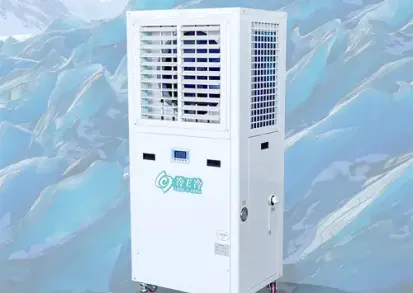
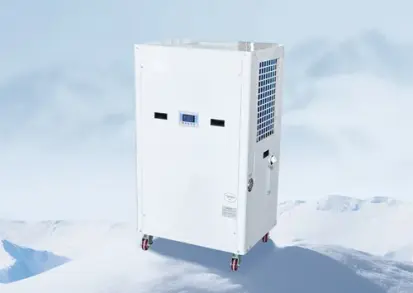
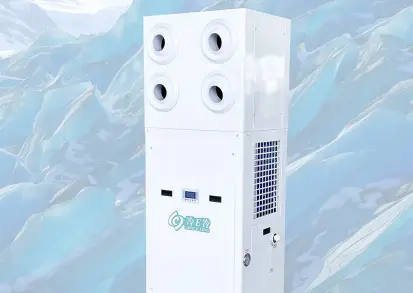
The jet air conditioner is an efficient cooling device developed for expansive industrial and commercial environments. It employs powerful jet airflow to provide long-range, high-velocity cooling, guaranteeing consistent temperature distribution even in expansive or elevated spaces. Equipped with efficient compressors and robust construction, it delivers potent cooling, minimal noise, and energy-efficient performance.

Regular maintenance is essential for maintaining cooling efficiency, stable airflow, and reliable operation. As an experienced industrial air conditioner manufacturer, Pengqiang recommends establishing a routine maintenance schedule based on the operating environment, usage intensity, and dust levels.
1. Filtration Maintenance
Clean the air filters every 2 to 4 weeks, contingent upon the environment. Dust and dirt can obstruct airflow and diminish cooling performance. Consistent cleaning guarantees optimal performance, mitigates overheating, and prolongs the air conditioner's lifespan, particularly in dusty or high-traffic industrial environments.
2. Examination of Coil and Fan
Examine and cleanse the evaporator and condenser coils quarterly. Accumulation of dust or grease might diminish heat exchange efficiency. Additionally, inspect the fan blades for debris or unbalance. Effective maintenance ensures robust airflow and uniform cooling performance during operation.

3. Refrigerant and Pressure Assessment
Every six months, have a professional assess the refrigerant level and system pressure. Inadequate refrigerant levels or leaks may result in ineffective cooling or compressor damage. Routine inspection guarantees optimal functionality and mitigates expensive repairs by detecting any issues early.
4. Thorough Annual Service
Annually, arrange a comprehensive expert maintenance inspection. This encompasses electrical inspection, drainage maintenance, lubrication of moving components, and system calibration. Annual maintenance ensures the jet air conditioner operates securely, efficiently, and dependably, promoting long-term energy conservation and minimizing the likelihood of malfunctions.
The right HP for an industrial air conditioner depends on more than the size of your facility. When selecting a suitable model, consider the cooling area, ceiling height, heat generated by machinery, number of workers, ventilation conditions, and local climate.
Small workshops or work areas: A 5hp aircon may be suitable for smaller spaces with relatively low heat loads.
Medium-sized workshops: 7HP or 10HP models can provide greater cooling capacity for larger areas or environments with higher heat generation.
Large industrial spaces: 12HP and 15HP models are better suited to larger workshops, factories, and other spaces requiring higher cooling capacity.
High-heat environments: If machinery, production equipment, or direct sunlight creates significant heat, a higher-HP model may be required even when the space itself is not particularly large.
Open or poorly insulated spaces: Larger cooling capacity may be needed because cooled air can escape more easily.
For a more accurate selection, evaluate the cooling load, room dimensions, heat sources, and operating conditions rather than choosing an air conditioner based on HP alone. If you are unsure which model is suitable, provide your facility size and operating conditions to the manufacturer for professional sizing advice.
1. Regular check-up
Every three to six months, check the pipes, joints, and valves that hold refrigerant. Check for rust, oil spots, or parts that don't fit together right. Finding wear or small leaks early on can stop big losses of refrigerant and make sure that the cooling works well for a long time.
2. Installing it right
Make sure that qualified professionals install the air conditioner using high-quality copper pipes and safe connections. Micro-leaks can happen over time because of bad welding, vibration, or the wrong way to move something. When installed correctly, the system is less stressed and the refrigerant flows without any air leaks.
3. Upkeep of the system
To avoid overheating and pressure unbalance, keep the system clean and in good shape. Clean the coils and filters often, and make sure the fan and blower work smoothly. Stable internal pressure makes the refrigerant lines less stressed, which stops leaks and makes the air conditioner last longer.




 +86-178-1894-1386
  taylor_jiao@pqzili.com