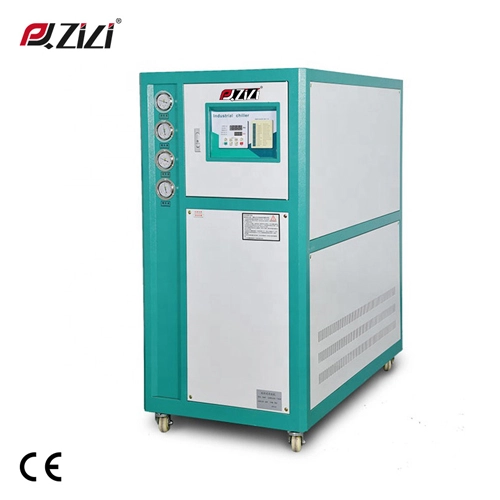
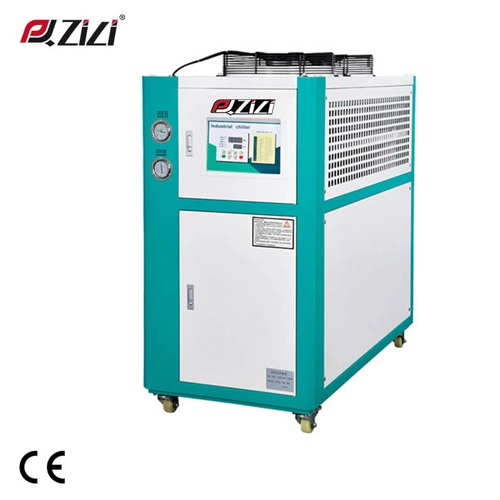
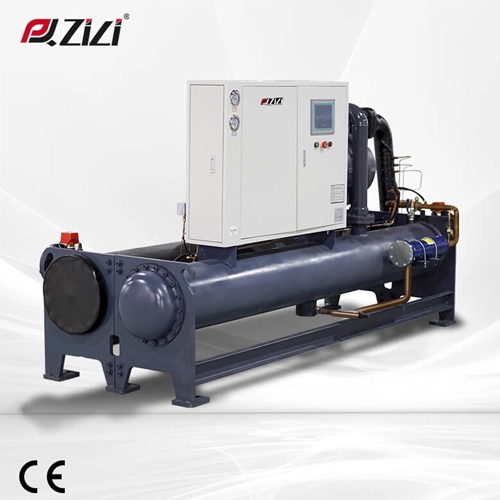
A louver air conditioner is designed for a simple but important purpose: delivering cooling air where it is actually needed. In a factory, workshop or warehouse, heat is rarely distributed evenly. Production equipment may create intense heat in one area, employees may work in another, and storage zones may have completely different cooling requirements.
This is where adjustable louvers become useful. Instead of relying on a fixed airflow direction, a louvered system allows the air outlet to be adjusted toward specific working areas.
PengqiangZili, also known as PQZILI, offers louvered industrial air conditioners designed for factories, workshops, warehouses and other large commercial spaces. Its current louvered range includes 5HP, 7HP and 10HP configurations with different fan arrangements.
For buyers comparing a 5hp air conditioner, 7 hp air conditioner, or 10hp air conditioner, the most important question is not simply which model has the largest capacity. The better question is which airflow configuration matches the building and its heat distribution.
The main advantage of a louvered system is directional control.
Traditional cooling systems may distribute air through fixed ducts or outlets. A louvered industrial air conditioner instead uses adjustable outlets to direct airflow toward particular zones. According to the ASHRAE Handbook – Industrial Air Conditioning, industrial HVAC design needs to consider factors such as temperature, humidity, air movement, air quality and the requirements of the occupied or process area.
This makes a louvered configuration especially useful when different parts of a building have different cooling needs.
PQZILI states that its louvered industrial air conditioner uses adjustable louvers, powerful airflow and high-efficiency compressors. The manufacturer also highlights corrosion-resistant materials and a durable construction intended for demanding environments.
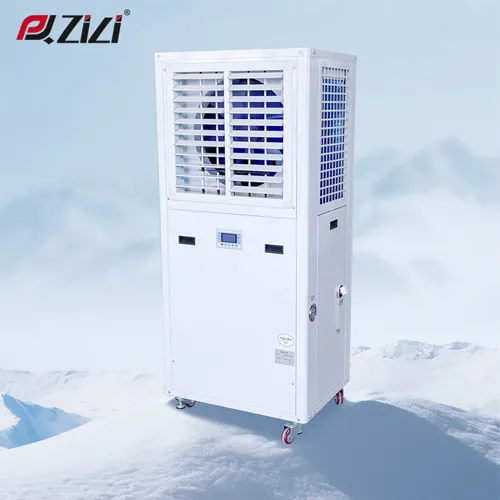
A louvered air conditioner does not simply provide cold air. It gives the operator greater control over where that air goes.
For example, in an assembly workshop, a louver can be positioned toward employee workstations rather than an unused storage area. In a factory with several heat-generating machines, airflow can be directed toward the hottest zones.
This makes the technology particularly relevant for facilities where cooling comfort needs to be targeted rather than evenly distributed throughout the entire building.
Louvered systems are most useful in large spaces where flexible air distribution is important.
Application | Why Louvered Cooling Works | Main Consideration |
Manufacturing workshop | Direct air toward production zones | Machinery heat |
Assembly line | Focus cooling on workers | Occupancy |
Warehouse | Cool active areas | Ceiling height |
Factory office | Adjustable employee comfort | Airflow direction |
Supermarket | Broad and controllable cooling | Customer/product zones |
Large commercial space | Flexible coverage | Building layout |
Rest area | Direct personal cooling | Occupancy density |
PQZILI specifically describes its louvered industrial AC as suitable for factories, workshops, warehouses, offices and large commercial areas. The company also identifies supermarkets as an application where adjustable airflow can help distribute cooling more evenly.
Horsepower should be treated as a starting point rather than a complete sizing method. Cooling requirements depend on machinery, people, lighting, outdoor conditions, insulation and ventilation.
The U.S. Department of Energy explains that commercial package air conditioners are used for space conditioning in commercial and industrial buildings and are subject to energy conservation standards. This reinforces the importance of evaluating both cooling requirements and equipment efficiency when making a selection.
A 5hp air conditioner can be a practical choice when cooling demand is moderate and the target area does not require extremely high airflow.
PQZILI's 5HP Louvered Industrial Air Conditioner is designed for direct cooling and individual comfort in larger spaces. The manufacturer specifies a 5HP compressor, 18 kW refrigerating capacity, 10–15 m blowing distance and a stated cooling area of 150–200 m² for this particular model.
These specifications make the model worth considering for:
Workshops
Assembly lines
Factory offices
Employee rest areas
Moderately occupied production zones
However, the published cooling area should not be treated as a universal sizing rule. Actual performance depends on the building and operating environment.
A 7 hp air conditioner is a logical step when the cooling requirement increases or when the application needs greater airflow coverage.
PQZILI lists both 7HP-S and 7HP-D vertical shutter configurations. The dual-fan 7HP-D model is designed for medium-to-large industrial and commercial environments, providing an alternative when greater airflow distribution is required.
A 7HP louvered system may be suitable for:
Larger production workshops
Medium-sized warehouses
Commercial facilities
Areas with higher occupancy
Work zones containing several heat sources
Rather than automatically choosing 10HP, buyers can consider whether the additional capacity of a 7HP system already matches the actual cooling load.
A 10hp air conditioner becomes more appropriate when the space is larger or internal heat generation is significantly higher.
PQZILI's 10HP-D vertical shutter model uses a dual-fan configuration and is designed for expansive industrial and commercial environments.
A 10HP system may be considered for:
Large manufacturing workshops
High-occupancy commercial areas
Large warehouses
Production zones with substantial machinery heat
Expansive open working areas
The key is to combine capacity with airflow planning. A large unit positioned incorrectly may cool the area immediately around the outlet while leaving distant workstations less comfortable.
A louvered system and a jet-type system solve different airflow problems.
PQZILI describes its jet-type industrial air conditioners as providing powerful, long-range airflow for high-rise buildings, warehouses and expansive workshops. The jet-type portfolio includes 5HP, 7HP, 10HP, 12HP and 15HP models.
Feature | Louvered AC | Jet-Type AC |
Primary advantage | Adjustable airflow direction | Long-distance airflow |
Best application | Zoned cooling | Large open spaces |
Airflow strategy | Targeted | Long-range |
Suitable building | Workshops and commercial areas | Warehouses and high-ceiling buildings |
Key selection factor | Airflow flexibility | Airflow reach |
Therefore, someone searching for a jet air aircon for sale should first determine whether the building needs long-distance airflow or flexible zone-by-zone cooling.
If several workstations are spread across a workshop, adjustable louvers may provide more useful control. If the building has a very high ceiling and a long open floor plan, a jet-type configuration may be worth considering.
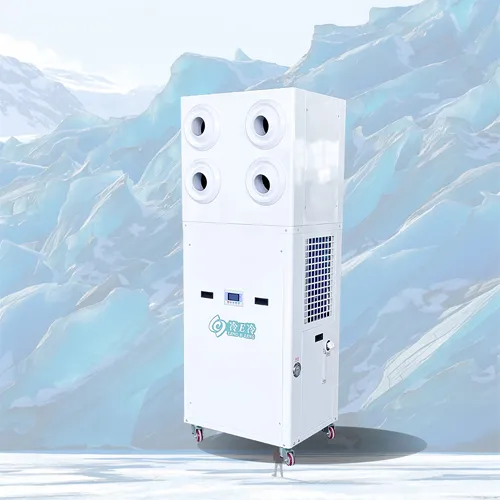
A commercial kitchen has different cooling requirements from a workshop or warehouse.
Cooking equipment produces heat and moisture, while exhaust hoods remove air from the kitchen. According to the ASHRAE Handbook – Kitchen Ventilation, commercial kitchen HVAC systems typically involve cooling, replacement air and exhaust as interconnected components.
For an ac for kitchen restaurant, therefore, the AC should be selected together with the kitchen's ventilation and exhaust design.
PQZILI offers dedicated kitchen air conditioners in 2HP, 3HP and 5HP configurations. The manufacturer describes these systems as suitable for high-temperature and grease-intensive environments.
A louvered industrial AC may be more appropriate for an adjacent dining, service or general commercial area than directly inside a high-grease cooking zone.
Installation position can significantly influence the effectiveness of directional airflow.
Consider the following:
Keep the airflow path clear so that air can reach the intended work area.
If employee comfort is the primary objective, position the unit so that airflow reaches workstations rather than unused areas.
Where machinery generates significant heat, airflow can be directed toward those zones to improve local conditions.
High ceilings can cause temperature differences between upper and occupied zones. Air-distribution planning should therefore be considered before installation.
For very large buildings, multiple appropriately positioned units may provide better zoning than one oversized unit.
Adjustable airflow is only useful when the system remains clean and operational.
PQZILI's product page specifically recommends checking power and configuration, inspecting filters and air outlets for dust or debris, and verifying that the louvers remain open and correctly positioned when cooling performance declines.
Routine maintenance should include:
Cleaning air filters
Inspecting louvers
Checking airflow
Cleaning accessible components
Inspecting refrigerant-related components
Checking electrical connections
Monitoring unusual noise or vibration
In dusty industrial environments, filter maintenance becomes particularly important because restricted airflow can reduce cooling performance.
Requirement | Suggested Direction |
Small-to-moderate cooling load | Consider 5HP |
Medium-to-large workshop | Consider 7HP |
Large industrial space | Consider 10HP |
Multiple work zones | Louvered configuration |
Need adjustable airflow | Louvered configuration |
Very long airflow distance | Consider jet-type |
High-temperature cooking area | Dedicated kitchen AC |
Large warehouse with high ceiling | Compare louvered and jet-type designs |
These are application guidelines rather than fixed sizing rules. A professional load calculation should be used for the final selection.
A louver air conditioner is an industrial AC equipped with adjustable louvers that allow users to control the direction of the conditioned airflow.
A 5HP louvered unit can be considered for workshops, assembly areas, factory offices, rest areas and other spaces with moderate cooling requirements.
A 7HP model may be suitable when the cooling load, occupied area or airflow requirement exceeds what a smaller unit can effectively handle.
It can be suitable for some large warehouses, but ceiling height, heat load, insulation and airflow requirements should be evaluated before choosing the capacity.
Louvered AC focuses on adjustable airflow direction, while jet-type AC is designed primarily to deliver powerful airflow over longer distances.
It can be considered for suitable commercial areas, but a dedicated kitchen AC is generally more appropriate for areas directly exposed to cooking heat and grease.
Yes. PQZILI currently lists 5HP, 7HP-S, 7HP-D and 10HP-D louvered/vertical shutter configurations.
A louver air conditioner is a strong option when the challenge is not simply removing heat but directing cooling to the right places. Adjustable louvers make these systems particularly useful in workshops, factories, warehouses, offices and other large spaces where heat loads and occupancy vary from one zone to another.
A 5hp air conditioner can suit moderate applications, while a 7 hp air conditioner offers additional capacity for medium-to-large areas. A 10hp air conditioner can address higher cooling loads and larger industrial environments. For a restaurant, an ac for kitchen restaurant should be selected with the kitchen's exhaust and replacement-air system in mind. For general commercial or adjacent working areas, however, a louvered system can provide useful directional control.
With dedicated louvered configurations and other industrial cooling options, PengqiangZili (PQZILI) provides solutions for different industrial and commercial environments. The final model should be selected according to cooling load, airflow distribution, building geometry and operating conditions—not horsepower alone.
 +86-178-1894-1386
  taylor_jiao@pqzili.com