Commercial kitchens are among the most challenging environments to cool. Unlike ordinary indoor spaces, restaurant kitchens operate with high-temperature cooking equipment, ovens, grills, steam, and continuous heat generation. Without a suitable cooling system, excessive heat can affect employee comfort, kitchen efficiency, and the overall working environment.
A standard air conditioner designed for homes or offices often cannot handle the demanding conditions of a professional kitchen. Restaurants and food service facilities require a dedicated commercial kitchen air conditioner that can provide reliable cooling while operating in high-temperature and high-load environments.
A properly designed air conditioner for restaurant kitchen applications helps maintain a comfortable working atmosphere, supports better ventilation performance, and reduces heat stress for kitchen staff.
As an experienced industrial cooling manufacturer, Pengqiang provides specialized kitchen cooling solutions designed for restaurants, commercial kitchens, and other food service environments. Its kitchen air conditioning systems focus on stable cooling performance, durability, and efficient operation in demanding conditions.
This guide explains why professional kitchens need dedicated cooling systems, the advantages of a kitchen air conditioner, and how businesses can select the right cooling solution.
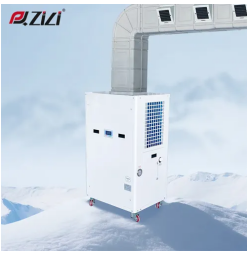
Restaurant kitchens generate significantly more heat than normal commercial spaces. Cooking appliances such as ovens, fryers, stoves, and steam equipment continuously release heat into the surrounding environment.
Several factors make kitchen cooling more complex:
High indoor temperatures caused by cooking equipment
Continuous operation during business hours
Heat accumulation in enclosed kitchen areas
Steam and humidity from food preparation
Increased comfort requirements for employees
Without effective cooling, kitchen workers may experience discomfort and reduced efficiency during long working periods. According to the U.S. Occupational Safety and Health Administration (OSHA), controlling workplace heat exposure is important for protecting workers in hot environments.
A dedicated ac for kitchen restaurant solution is designed to provide consistent temperature control while handling the unique challenges of commercial food preparation areas.
Unlike residential air conditioning systems, professional kitchen cooling equipment is built for higher workloads and more demanding operating conditions.
A commercial kitchen air conditioner is specifically designed to operate in environments where heat, humidity, and continuous usage are common. Compared with standard AC systems, commercial kitchen units require stronger components and more reliable performance.
Restaurant kitchens often operate at elevated temperatures because of cooking equipment and constant food preparation activities. A suitable kitchen cooling system must maintain stable operation even when surrounding temperatures increase.
High-performance compressors and durable components allow commercial kitchen air conditioners to provide reliable cooling during peak cooking periods.
Kitchen-focused air conditioning systems require designs that consider these environmental factors.
Proper installation and maintenance help reduce contamination risks and maintain long-term cooling efficiency.
Many restaurants operate for extended periods, especially during breakfast, lunch, and dinner service. A reliable commercial kitchen ac unit must provide continuous cooling without frequent interruptions.
Stable operation helps maintain a comfortable environment while supporting smooth daily kitchen activities.
The American Society of Heating, Refrigerating and Air-Conditioning Engineers (ASHRAE) highlights the importance of proper HVAC design in commercial kitchen environments, where ventilation, heat removal, and indoor conditions must work together effectively.
Pengqiang develops industrial and commercial cooling equipment designed for different application environments, including restaurant and kitchen cooling requirements.
Pengqiang kitchen air conditioners provide several important advantages:
Feature | Benefit |
Powerful cooling performance | Handles high-temperature kitchen environments |
Reliable compressor system | Supports long operating hours |
Compact design | Suitable for different kitchen layouts |
Stable airflow | Improves indoor comfort |
Durable components | Designed for commercial applications |
Easy maintenance | Helps reduce downtime |
A professional kitchen ac cooler should not only reduce temperature but also provide consistent performance in a challenging environment where heat generation changes throughout the day.
Pengqiang focuses on providing practical cooling solutions that help restaurants and commercial kitchens achieve better temperature management while maintaining efficient operation.
When searching for kitchen cooling solutions, some buyers compare a kitchen chiller with a commercial kitchen air conditioner. Although both involve cooling technology, they serve different purposes.
Feature | Kitchen Chiller | Commercial Kitchen Air Conditioner |
Main Purpose | Cooling food, ingredients, or equipment | Cooling the kitchen environment |
Cooling Target | Storage temperature | Employee comfort and indoor temperature |
Application | Refrigeration systems | Restaurant and food service areas |
Installation | Cold rooms, storage equipment | Kitchen spaces |
Main Benefit | Preserves food quality | Controls heat and improves comfort |
A kitchen chiller is mainly used for refrigeration and food preservation, while a commercial kitchen air conditioner focuses on creating a comfortable and controlled working environment.
For restaurants that need to manage high indoor temperatures caused by cooking activities, choosing a dedicated air conditioning unit for commercial kitchen applications is usually the more suitable solution.
While a kitchen chiller focuses on food preservation and temperature-controlled storage, a commercial kitchen air conditioner focuses on maintaining a comfortable working environment. Proper temperature management and suitable food handling conditions are important parts of food service operations according to FDA food safety resources
A reliable commercial kitchen AC unit is widely used in different food service environments where heat control and indoor comfort are essential. Each application has unique cooling requirements, but all require stable performance under continuous operation.
Restaurant kitchens often experience rapid temperature increases during peak service hours. A suitable air conditioner for restaurant kitchen applications helps remove excess heat, allowing chefs and staff to work more comfortably while maintaining efficient operations.
Hotel kitchens typically operate throughout the day to support breakfast services, banquets, and room dining. A professional kitchen cooling system helps maintain stable temperatures despite changing workloads.
School cafeterias, corporate dining areas, and institutional kitchens require reliable cooling because they often serve large numbers of people within short periods. A properly selected kitchen AC system helps maintain a comfortable preparation environment.
Bakeries generate considerable heat from ovens and baking equipment. A kitchen air conditioner helps reduce heat accumulation and improves working conditions for employees involved in long production cycles.
Large-scale food production facilities require dependable cooling systems because food preparation takes place continuously. Industrial-grade kitchen cooling equipment supports better temperature management in large preparation areas.
Selecting the right air conditioning unit for commercial kitchen applications requires evaluating several factors. A properly sized system improves cooling performance, reduces energy waste, and provides better long-term value.
The cooling capacity should match the size of the kitchen and the amount of heat generated by cooking equipment. Undersized systems may struggle during busy periods, while oversized systems can increase unnecessary operating costs.
The layout and volume of the kitchen directly affect cooling requirements. Large kitchens with open layouts generally require stronger cooling capacity compared with smaller preparation areas.
Cooking appliances, ovens, fryers, lighting, and staff activity all contribute to indoor heat. Understanding the total heat load helps determine the appropriate commercial kitchen air conditioner model.
Kitchen cooling systems should be designed together with ventilation solutions to ensure proper airflow, heat removal, and indoor comfort. Professional HVAC design guidelines recommend considering building layout, airflow distribution, and operating conditions when selecting an air conditioning unit for commercial kitchen applications.
Commercial kitchens require regular equipment maintenance because grease, dust, and continuous operation can affect system performance. Choosing an easy-to-maintain commercial kitchen ac unit helps improve reliability and extend service life.
Installing a dedicated kitchen ac cooler provides several advantages for restaurants and food service businesses.
High temperatures can create an uncomfortable working environment for kitchen staff. Effective cooling helps reduce heat stress and allows employees to maintain productivity during long shifts.
A cooler kitchen environment helps staff perform tasks more efficiently, especially during busy cooking periods when heat levels increase rapidly.
A professional kitchen cooling system maintains more consistent temperatures compared with general-purpose air conditioners, helping create a better working environment.
Excessive heat can affect kitchen equipment performance and surrounding components. Maintaining suitable temperatures may help improve the operating conditions of appliances and electrical systems.
Although customers may not enter the kitchen area, a comfortable back-of-house environment supports smoother restaurant operations and better service quality.
Pengqiang specializes in industrial and commercial cooling solutions(https://www.pqzilimachinery.com/industrial-air-conditioners/) designed for challenging operating environments. Its kitchen air conditioning systems are developed to meet the needs of restaurants, commercial kitchens, and food service facilities requiring reliable temperature control.
Key advantages include:
· Professional experience in industrial cooling equipment
· Solutions designed for commercial applications
· Stable cooling performance during long operating hours
· Durable components for demanding environments
· Flexible product options for different kitchen sizes
· Technical support for cooling system selection
From restaurants and hotels to large food production facilities, Pengqiang provides practical cooling solutions that help businesses create more comfortable and efficient kitchen environments.
A commercial kitchen air conditioner is a cooling system designed specifically for restaurants and food service environments. It provides reliable temperature control in areas affected by cooking heat, steam, and continuous operation.
Household air conditioners are not designed for the high heat, grease, humidity, and long operating hours found in professional kitchens. A commercial kitchen system provides stronger performance and better durability.
The required size depends on kitchen area, ceiling height, cooking equipment, heat load, and operating conditions. A professional evaluation helps determine the correct cooling capacity.
A kitchen chiller is mainly used for refrigeration and food storage, while a kitchen air conditioner cools the working environment for employees and kitchen operations.
Yes. Pengqiang provides different industrial cooling solutions and can recommend suitable systems based on application requirements, installation conditions, and facility size.
INDUSTRIAL AIR CONDITIONER SOLUTIONS HIGH-EFFICIENCY COOLING SYSTEMS BY PENGQIANG ZILI MACHINERY
HOW THE MONTREAL PROTOCOL IMPACTS INDUSTRIAL CHILLERS AND REFRIGERATION SYSTEMS
THE DIFFERENCE BETWEEN INDUSTRIAL AIR CONDITIONING AND INDUSTRIAL CHILLER?
 +86-178-1894-1386
  taylor_jiao@pqzili.com