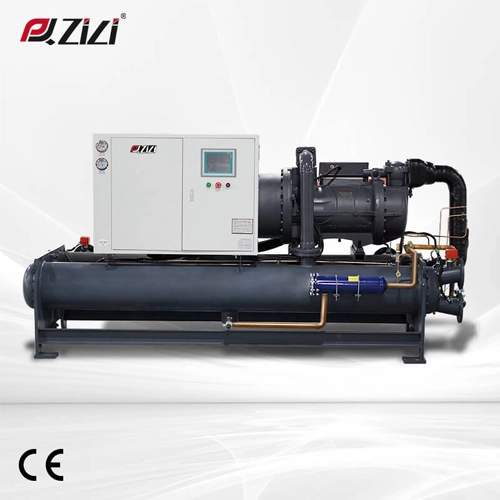
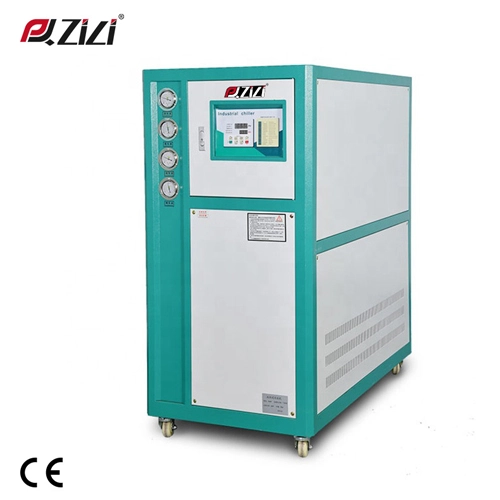
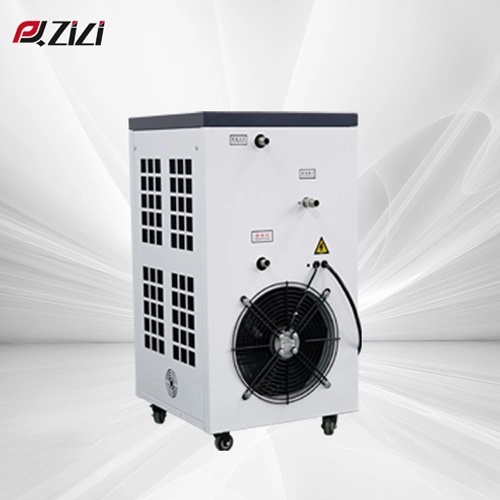
Industrial air conditioning is not simply about choosing the unit with the highest horsepower. A practical selection should match the equipment to the building layout, heat sources, ceiling height, airflow distance, operating environment and maintenance requirements.
For example, a compact workshop may benefit from a 5hp aircon, while a high-ceiling production hall may require the longer airflow of a jet-type system. A commercial kitchen has completely different requirements from a warehouse, and laser-processing areas may need dedicated process cooling rather than room air conditioning.
PengqiangZili offers several industrial air-conditioning configurations, including louvered, jet-type, kitchen and wall-mounted models. Its current product range includes 5HP, 7HP and 10HP options, as well as larger units for demanding industrial environments.
Horsepower is useful for narrowing down equipment choices, but it should not be the first decision.
ASHRAE's guidance on industrial air conditioning emphasizes that equipment selection should consider the required environment for personnel and processes, including temperature, humidity, air movement, air quality and cleanliness. It also recommends evaluating process heat loads, exhaust requirements and the specific zones that require temperature control.
This means the same horsepower rating can produce very different results depending on where the unit is installed.
Before selecting a unit, identify:
The primary purpose of cooling
Heat generated by machinery and equipment
Ceiling height
Required airflow distance
Number of workers
Outdoor climate
Ventilation and exhaust requirements
Available installation space
Expected operating hours
This approach makes it easier to decide whether a 5hp aircon, 7 hp air conditioner, or 10hp air conditioner is the right starting point.
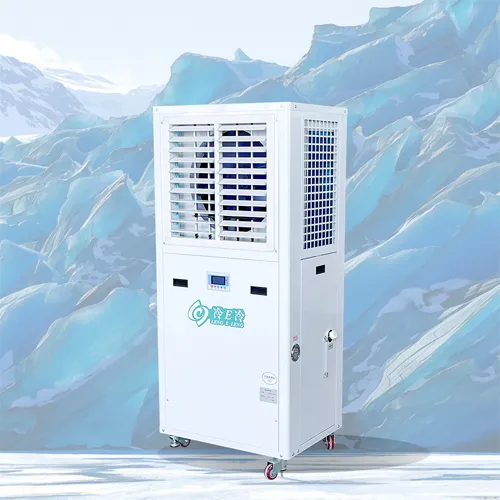
Different industrial spaces benefit from different airflow arrangements. PQZILI's product range is particularly useful because it separates its industrial AC solutions into louvered, jet-type, kitchen and wall-mounted categories.
Application | Recommended Configuration | Suitable HP Starting Point | Main Reason |
Small or medium workshop | Louvered / hanging jet | 5HP | Flexible air distribution |
Production workshop | Louvered / jet-type | 5–7HP | Broad or directional coverage |
High-ceiling warehouse | Jet-type | 7–10HP+ | Longer airflow distance |
Large manufacturing hall | Jet-type | 10HP+ | High-volume air delivery |
Commercial kitchen | Kitchen AC | 2–5HP | Heat and grease resistance |
Small restricted area | Wall-mounted | 5–7HP | Space-efficient installation |
Laser-processing room | Laser chiller | Application-specific | Direct process cooling |
The horsepower ranges above are a preliminary selection guide rather than a substitute for a professional cooling-load calculation.
A 5hp air conditioner is worth considering when cooling demand is moderate and the installation does not require exceptionally long-distance airflow.
PQZILI lists both a 5HP louvered industrial air conditioner and 5HP AirJet models. The louvered design provides adjustable air outlets and broad airflow, while the AirJet configuration is intended for stronger directional airflow.
A 5hp aircon can therefore work well in:
Medium-sized workshops
Small production areas
Commercial workspaces
Smaller warehouses
Areas where workers are concentrated in specific zones
The advantage of starting with 5HP is not simply lower equipment cost. A correctly sized unit can also avoid installing unnecessary cooling capacity.
A 7 hp air conditioner becomes more attractive when the room is larger, heat generation is higher, or air needs to travel farther.
PQZILI lists several 7HP configurations, including the 7HP Air Conditioner Top AirJet Type, 7HP vertical model, vertical shutter type and hanging jet type.
A 7 hp aircon may be suitable for:
Production equipment can generate considerable heat even when the occupied area is relatively small. A 7HP system can provide more cooling capacity while allowing the airflow design to focus on working zones.
Warehouses often have large volumes of air but relatively few occupants. Instead of trying to cool every cubic meter equally, the system can be positioned to improve conditions around loading, packing and operator areas.
If machinery, lighting and personnel create more heat than a 5HP system can comfortably manage, moving to a 7HP configuration may provide a better operating margin.
A 10hp air conditioner is better suited to applications where both cooling demand and airflow requirements are substantial.
PQZILI's 10HP product selection includes a vertical shutter model and a top AirJet model. Its jet-type range extends from 5HP through 15HP, allowing buyers to scale the system according to the size and configuration of the space.
A 10hp air conditioner can be considered for:
Large workshops
High-ceiling production buildings
Expansive warehouses
Manufacturing areas with substantial internal heat
Large commercial or industrial spaces
For these applications, airflow distribution can be as important as nominal capacity. A powerful unit positioned incorrectly may produce a cold area near the outlet while leaving distant working zones uncomfortable.
A jet air aircon for sale is particularly relevant when the building layout creates a long-distance airflow challenge.
PQZILI describes its jet-type industrial air conditioner as providing powerful, long-range airflow for high-rise buildings, warehouses and expansive workshops.
Jet-type equipment is useful when:
The ceiling is high
The production line is long
Cooling needs to reach distant workstations
Equipment placement limits conventional AC installation
Air must be delivered across a large open area
The U.S. Department of Energy's Better Plants program also recommends optimizing fan operation and airflow, including using variable-speed control where appropriate and maintaining effective airflow through fan systems.
Therefore, when comparing a jet air aircon for sale, consider not only cooling output but also airflow direction, fan efficiency, installation position and control strategy.
A commercial kitchen is one of the most demanding environments for air conditioning. Cooking equipment creates heat, moisture and airborne contaminants, while exhaust systems continuously remove air from the space.
ASHRAE identifies commercial kitchen HVAC as an integrated system involving cooling, replacement air and exhaust. Its industrial air-conditioning guidance also stresses the importance of accounting for exhaust and process conditions when designing cooling systems.
For an ac for kitchen restaurant, consider:
1. Cooking equipment and heat output
2. Exhaust hood capacity
3. Makeup-air requirements
4. Grease exposure
5. Required airflow
6. Cleaning and maintenance access
7. Installation location
PQZILI specifically lists 2HP, 3HP and 5HP kitchen air conditioners. The company describes these models as suitable for high-temperature environments, with strong airflow and simplified maintenance.
.webp "2hp-kitchen-air-conditioner_20251028160339 (1).webp")
Laser equipment should not automatically be cooled by a room AC. In many laser-processing applications, the heat must be removed directly from the laser system or another process component.
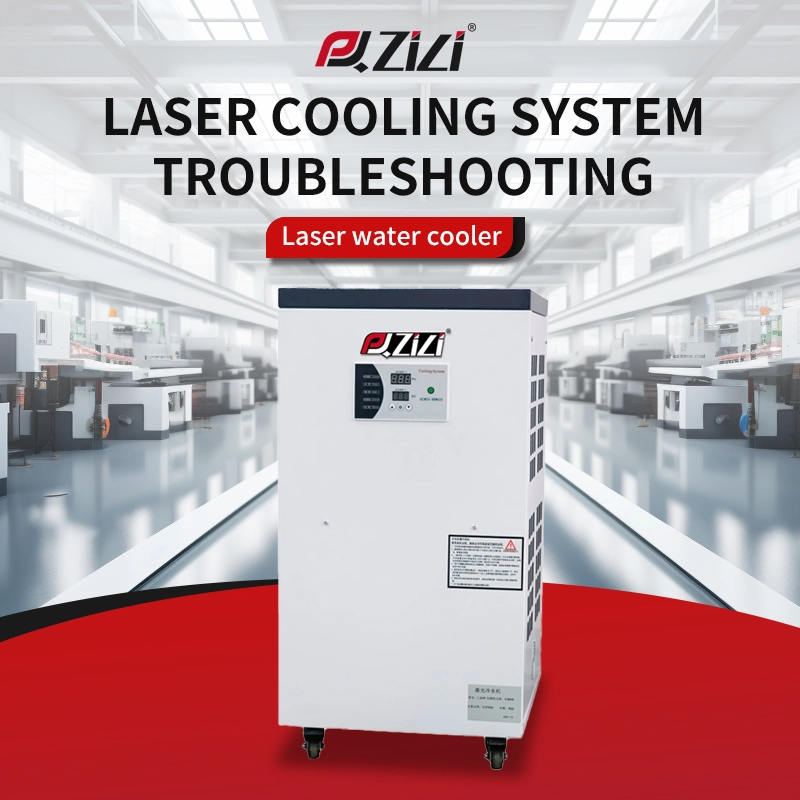
PQZILI separates its laser cooling products from its industrial air conditioners and lists dedicated laser chillers from 0.6L through 1.5L configurations. Its website identifies laser applications as part of its industrial cooling portfolio.
This makes laser coolers more appropriate when the objective is process cooling rather than simply improving room temperature.
When evaluating laser cooling equipment, focus on:
Heat load
Coolant requirements
Flow rate
Required temperature stability
Operating schedule
Alarm and protection functions
Compatibility with the laser system
The choice between room air conditioning and a dedicated laser cooling system should therefore be based on where the heat needs to be removed.
Refrigerant selection is another factor that should not be overlooked when purchasing industrial cooling equipment.
The U.S. EPA explains that stationary air-conditioning and refrigeration equipment is subject to refrigerant-management requirements, including rules concerning the handling and recycling of refrigerants.
Buyers should therefore ask suppliers for the refrigerant type, applicable service requirements and relevant compliance information before placing an order.
This is especially relevant when an industrial AC is being selected primarily to improve working conditions rather than protect a production process.
Before requesting a quotation from an industrial AC manufacturer, prepare the following information:
Information | Why It Matters |
Floor area | Establishes the approximate cooling scale |
Ceiling height | Influences airflow distribution |
Heat-producing equipment | Determines internal heat load |
Number of workers | Adds sensible and latent heat |
Indoor temperature target | Defines cooling requirements |
Installation position | Determines airflow direction |
Exhaust system | Affects ventilation load |
Operating hours | Helps evaluate equipment durability |
Electrical supply | Ensures compatibility |
Environmental conditions | Helps determine suitable construction |
Providing these details allows PengqiangZili to recommend a configuration based on the actual application rather than simply selecting a horsepower number.
It can be suitable for smaller or moderately loaded workshops, especially where the cooling zone is clearly defined. The actual selection should be based on heat load and airflow requirements.
Consider 7HP when the space has greater internal heat, a larger occupied area or longer airflow requirements that make a 5HP configuration insufficient.
Industrial 7HP systems are designed for more demanding environments and can provide stronger airflow and configurations suited to workshops, warehouses and production spaces.
It may be, particularly when combined with an appropriate long-range airflow design. Ceiling height and heat load should be evaluated before final selection.
Jet-type units are particularly useful in high-ceiling buildings, expansive workshops and warehouses where cooled air needs to travel a longer distance.
A dedicated kitchen air conditioner is generally more appropriate than a standard office AC because commercial kitchens experience higher temperatures, grease exposure and substantial exhaust requirements.
No. Laser coolers are designed to remove heat from laser equipment or related processes, while industrial air conditioners primarily control the temperature of the surrounding air.
The best industrial air conditioner is determined by the application, not by horsepower alone. A 5hp aircon can be practical for moderate cooling requirements, a 7 hp air conditioner can provide additional capacity for production and warehouse environments, and a 10hp air conditioner can address larger spaces with higher heat loads.
For high-ceiling facilities, a jet air aircon for sale can offer the long-range airflow needed to distribute cooling effectively. For restaurants, an ac for kitchen restaurant should be selected alongside the exhaust and makeup-air system. For laser-processing equipment, dedicated laser coolers may be the more appropriate solution.
With louvered, jet-type, kitchen and wall-mounted configurations, PengqiangZili provides a broad range of industrial air-conditioning options. Its product selection includes 5HP, 7HP, 10HP and larger models, allowing businesses to choose equipment according to space layout, airflow requirements and application conditions.
 +86-178-1894-1386
  taylor_jiao@pqzili.com