A JET-TYPE INDUSTRIAL AIR CONDITIONER is designed to solve a common problem in large buildings: getting conditioned air from the equipment to the areas where people and production processes actually need it. Factories, warehouses and workshops often feature high ceilings, long production lines, open floor plans and concentrated heat sources. In these environments, simply increasing cooling capacity does not necessarily improve comfort.
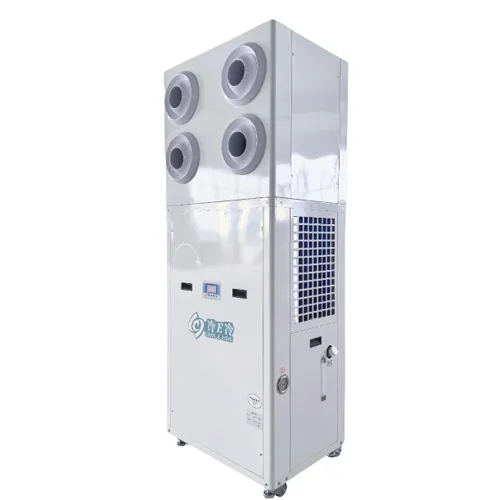
Installation planning is therefore critical. PQZILI offers a Top AirJet range covering 5HP, 7HP, 10HP, 12HP and 15HP configurations for large commercial and industrial environments. Its product information emphasizes powerful airflow for expansive spaces such as workshops and warehouses.
Rather than focusing only on horsepower, this guide explains how to plan the installation, airflow direction and maintenance of a jet-type industrial AC.
The performance of a jet-type system depends heavily on how conditioned air moves through the building.
According to the ASHRAE Handbook – Room Air Distribution, air-distribution systems are designed to provide thermal comfort or support processes, while factors such as heat loads, outlet type, discharge velocity and outlet location influence the resulting airflow pattern.
This is especially important for industrial facilities because their heat distribution is rarely uniform. A production machine may create substantial heat in one area while an adjacent storage zone requires much less cooling.
The purpose of installation is not simply to make the area around the AC cold. The objective is to deliver conditioned air effectively to the occupied and process zones.
For example, consider a long production workshop. If a cooling unit is installed at one end but its discharge is blocked by equipment, the airflow may not reach workers farther along the production line. A correctly planned jet-type installation can use the outlet's directional airflow to cover a larger portion of the working area.
The installation location should be determined after reviewing the building layout, heat sources and working zones.
A suitable position should provide:
A relatively clear airflow path
Access for maintenance
Appropriate electrical connections
Sufficient clearance around the equipment
A useful direction toward occupied or process areas
The ASHRAE Handbook – Room Air Distribution Equipment specifically notes that obstructions can affect the primary air-distribution pattern and that the interaction of multiple air outlets can change airflow throw, temperature and velocity.
This means that the available installation space should not be the only consideration.
Tall machinery, storage racks, partitions and other structures can interfere with the intended airflow.
This is particularly important in warehouses. If a jet-type AC is installed directly behind a tall storage rack, the rack may interrupt the airflow before it reaches the occupied working area.
Before installation, identify major obstacles and determine whether the airflow can travel along the intended route.
Industrial buildings can have substantially greater ceiling heights than offices or residential spaces. This changes how conditioned air moves through the room.
Warm air tends to rise while cooler air can move downward, and the resulting temperature distribution depends on heat sources and supply-air characteristics. The ASHRAE Handbook – Room Air Distribution explains that heat gain, supply conditions, outlet characteristics and outlet location all influence air movement and temperature stratification.
Therefore, a jet-type AC should be positioned with the occupied zone in mind rather than simply installed at the most convenient elevation.
For a high-ceiling factory, the key question is whether the cooling airflow can effectively reach the level where workers and production processes are located.
A system that mainly conditions upper air may not provide the desired comfort at floor level.
In a large open workshop, the airflow can potentially be directed along the main production route. This can be more useful than discharging air toward an area with little occupancy.
The direction of the outlet is one of the most important installation considerations for a jet-type system.
Instead of aiming the airflow randomly into the room, identify the areas with the highest cooling priority.
Target Area | Installation Consideration |
Worker stations | Direct airflow toward occupied zones |
Production lines | Follow the length of the work area |
Machinery | Consider localized heat generation |
Warehouse aisles | Keep the airflow path unobstructed |
Rest areas | Avoid unnecessary airflow toward storage |
Large open halls | Consider multiple airflow paths |
A long assembly or manufacturing line may benefit from an airflow path that follows the production route.
The objective is to reduce the distance between the discharge path and the people or equipment that require cooling.
Industrial machinery can create concentrated sensible heat loads. The ASHRAE Handbook – Space Air Diffusion identifies the magnitude, number, location and type of heat sources as important factors in room air-distribution behavior.
Consequently, the location of heat-generating equipment should be considered before deciding where to point the AirJet outlet.
A very large facility does not necessarily need one extremely powerful air conditioner.
Multiple units may provide better coverage when the building has:
A long floor plan
Separate production areas
Different heat loads
Multiple working zones
Significant obstacles
Different operating schedules
For example, a long manufacturing hall may be divided into several cooling zones. Each unit can then serve a specific portion of the facility.
Facility Layout | Possible Cooling Strategy |
Compact workshop | One appropriately sized unit |
Long factory | Multiple units along the production area |
Large warehouse | Separate units for different zones |
Mixed storage and production | Prioritize occupied/process areas |
High-heat production section | Dedicated cooling zone |
The final arrangement should be determined through appropriate cooling-load and airflow analysis rather than simply multiplying a floor-area estimate.
The model selected will influence the airflow strategy.
PQZILI lists 5HP, 7HP and 10HP Top AirJet models within its jet-type industrial air-conditioner range.
A 5hp air conditioner can be considered for smaller industrial and commercial areas where the cooling requirement is moderate.
PQZILI's 5HP Top AirJet model is listed with an 18 kW refrigerating capacity and 3,350 m³/h air volume, with a stated cooling area of 150–200 m².
For installation, the priority should be ensuring that its airflow reaches the main working zone without being immediately blocked.
A 7 hp air conditioner provides a higher capacity option for larger areas.
PQZILI's 7HP Top AirJet model is listed with a 25 kW refrigerating capacity and 4,200 m³/h air volume, with a stated cooling area of 250–300 m².
A 7HP system can be considered when the building requires more cooling and airflow coverage than a 5HP unit can provide.
A 10hp air conditioner is intended for larger and more demanding environments.
PQZILI lists its 10HP Top AirJet model with a 36 kW refrigerating capacity and 6,700 m³/h air volume, with a stated cooling area of 400–450 m².
However, a larger compressor does not automatically mean better performance. The building's actual cooling load and airflow requirements should determine the final selection.
Jet-type and louvered industrial air conditioners use different airflow strategies.
Factor | Jet-Type Industrial AC | Louvered Industrial AC |
Main focus | Long-range airflow | Adjustable direction |
Best suited to | Large open areas | Targeted cooling zones |
Key installation issue | Airflow reach | Airflow positioning |
Typical application | Workshops and warehouses | Factories and commercial spaces |
Main question | How far must air travel? | Where should air be directed? |
PQZILI separates these configurations within its industrial air-conditioner portfolio, listing both louvered and jet-type products.
Therefore, buyers looking for a jet air aircon for sale should evaluate the building's geometry and airflow requirements before deciding between the two configurations.
A tall machine or storage rack can disrupt the intended airflow pattern.
The easiest installation point may not be the best point for cooling distribution.
Machinery, lighting, people and other internal loads can affect local cooling requirements.
One extremely large unit may create uneven conditions if the building has several separate cooling zones.
Filters, coils, fans and electrical components require periodic inspection and maintenance.
Maintenance should be considered during the installation stage rather than after the equipment is already operating.
PQZILI recommends cleaning filters every two to four weeks depending on environmental conditions, inspecting evaporator and condenser coils quarterly, checking refrigerant and system pressure periodically, and arranging comprehensive annual service.
In dusty manufacturing environments, filter contamination can happen quickly. A difficult-to-access unit may therefore increase maintenance time and operating costs.
Make sure technicians have adequate access for:
Filter cleaning
Coil inspection
Fan inspection
Electrical servicing
Refrigerant checks
Drainage maintenance
General equipment inspection
Item | What to Check |
Airflow path | Is the discharge route clear? |
Occupied zone | Does airflow reach workers? |
Heat sources | Where is the highest heat load? |
Building height | Will airflow reach the required level? |
Obstacles | Could machinery block the air stream? |
Ventilation | Will exhaust fans alter airflow? |
Number of units | Can one unit cover the required area? |
Maintenance | Is service access available? |
Future changes | Could equipment relocation affect airflow? |
This checklist can help facility managers and HVAC contractors discuss installation requirements with the equipment supplier before finalizing the layout.
It should be positioned where the discharge airflow has a clear path toward the main occupied or process area. The exact location depends on building geometry, heat loads and airflow requirements.
It can be suitable for smaller industrial spaces with moderate cooling loads. PQZILI lists its 5HP Top AirJet model at 18 kW refrigerating capacity and 3,350 m³/h air volume.
A 7HP unit can be positioned to direct airflow toward the main working zone. The installation should avoid major obstacles and account for the building's heat sources.
A 10hp air conditioner may be suitable, but insulation is also important. Poor roof or wall insulation can increase heat gain and cooling demand, meaning multiple air conditioners may be needed to maintain a comfortable indoor temperature.
There is no universal number. The required quantity depends on cooling load, building dimensions, airflow distribution, heat sources and zoning requirements.
A dedicated kitchen AC is generally more appropriate for the cooking zone because commercial kitchens have specific exhaust, replacement-air and heat-load requirements. Jet-type systems may be considered for suitable adjacent commercial spaces.
Neither is universally better. Jet-type systems emphasize long-range airflow, while louvered systems emphasize adjustable airflow direction. The building layout should determine which approach is more appropriate.
The performance of a JET-TYPE INDUSTRIAL AIR CONDITIONER depends on much more than compressor horsepower. Installation position, airflow direction, building height, heat sources, obstacles and maintenance access all influence whether conditioned air reaches the areas that need it.
A 5hp air conditioner can be considered for moderate industrial applications, while a 7 hp air conditioner or 10hp air conditioner may be more appropriate for progressively larger cooling requirements. For buyers searching for a jet air aircon for sale, however, the most important question should be how effectively the equipment can distribute air throughout the actual facility.
PQZILI provides Top AirJet models from 5HP to 15HP as part of its industrial air-conditioning range, alongside louvered and kitchen-specific solutions.
By treating airflow planning and installation as an integral part of HVAC design, factories, warehouses and workshops can make better use of the long-range characteristics of jet-type cooling equipment.
 +86-178-1894-1386
  taylor_jiao@pqzili.com