In industrial chillers, refrigerants are among the core factors that determine cooling performance and energy efficiency. With increasingly strict environmental regulations and rising demands for temperature precision in industrial production, the selection of refrigerants has become critical. At present, the most common refrigerants in chillers are R134a and R410A. These two differ significantly in terms of application scenarios, thermodynamic properties, and environmental characteristics. This article provides an in-depth analysis of their differences in chiller applications, helping enterprises make more informed choices during equipment selection.
Basic Characteristics
R134a is a hydrofluorocarbon (HFC) refrigerant. Since it contains no chlorine, it does not harm the ozone layer, with an Ozone Depletion Potential (ODP) of zero. However, its Global Warming Potential (GWP) is relatively high, at around 1430.
Thermodynamic Performance
R134a operates at relatively low evaporation pressures, ensuring stable operation. It is highly compatible with compressor lubricants and offers a high level of operational safety.
Application Scope
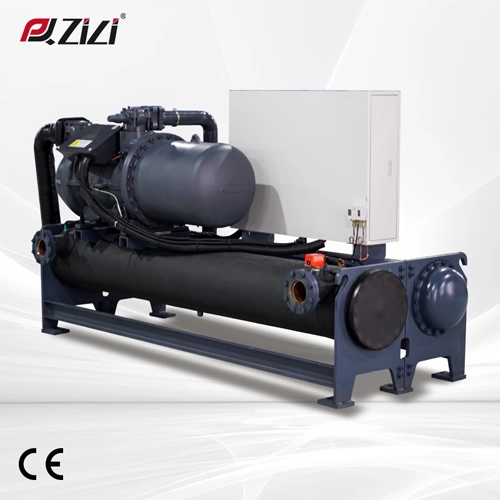
Medium- to large-scale chillers: R134a is typically used in screw and centrifugal chillers to meet large cooling demands.
Medium- and high-temperature applications: Performs well in mid- to high-temperature cooling conditions, widely applied in food & beverage, chemical production, and central air conditioning systems
Long-duration operation: Its strong chemical stability makes it suitable for factories running continuously 24/7
Pros and Cons
Advantages: High stability, good safety, and reliable cooling performance.
Disadvantages: Many countries and regions plan to phase it down and eventually ban it due to environmental concerns.
Basic Characteristics
R410A is a blended HFC refrigerant composed of R32 and R125 in a 50:50 ratio. Like R134a, it contains no chlorine, and its ODP is zero. However, its GWP is even higher, at about 2088.
Thermodynamic Performance
R410A operates at higher evaporation and condensation pressures compared to R134a. Its heat transfer efficiency is higher, meaning that chillers with the same cooling capacity can be designed more compactly. Its cooling capacity per unit volume is higher, making it suitable for small chillers and split systems.
Application Scope
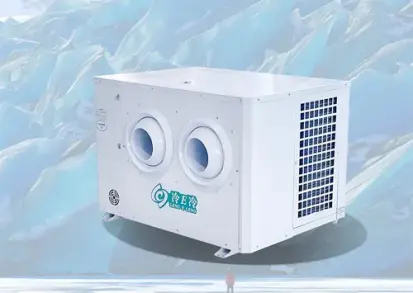
Small chillers: Commonly used in small air-cooled chillers, laser chillers, and compact air conditioning systems for residential and commercial use.
Space-sensitive equipment: Since R410A allows for smaller compressors at the same cooling capacity, it is often used in compact equipment.
Rapid cooling needs: With strong heat transfer performance, R410A provides faster cooling, making it suitable for processes requiring quick temperature drops.
Pros and Cons
Advantages: High cooling efficiency, smaller equipment size, and faster cooling speeds.
Disadvantages: Operates at higher pressure, requiring stronger compressors and piping, and has a high GWP, conflicting with long-term environmental goals.
Operating Pressure: R134a operates at lower pressures, ideal for large screw chillers and long-term systems; R410A works at higher pressures, with better heat exchange efficiency, suitable for smaller machines and fast cooling needs.
Energy Efficiency: R410A delivers higher cooling capacity per unit volume, enabling higher efficiency in limited spaces; R134a performs more efficiently in large-scale, long-duration operations.
Application Scenarios: R134a is mainly used in medium- to large-scale industrial chillers for food, chemical, and central HVAC industries; R410A is mainly used in small air-cooled chillers, laser chillers, and split AC systems.
Environmental Outlook: Although both have zero ODP, R134a’s GWP is 1430 and R410A’s is 2088. With stricter global controls on greenhouse gas emissions, both are expected to be gradually replaced by more eco-friendly refrigerants such as R32, R1234yf, and R290.
In the future chiller market, low-GWP refrigerants will gradually replace R134a and R410A. Examples include:
R32: Lower GWP with excellent energy efficiency, already widely used in small chillers and air conditioning systems.
R1234yf: With a GWP below 1, it is considered a truly eco-friendly refrigerant. Currently used mainly in automotive air conditioning, but gradually extending to other refrigeration equipment.
R290 (Propane): A natural refrigerant with very low environmental impact. However, its flammability requires enhanced safety designs.
When selecting chillers, enterprises should not only consider the current performance of refrigerants but also evaluate future regulatory requirements and the feasibility of alternatives.
R134a and R410A each have their strengths in chiller applications. R134a’s low pressure and high stability make it suitable for medium- and large-scale screw and centrifugal chillers, particularly for factories requiring continuous 24-hour operation. R410A, with its higher pressure and superior cooling efficiency, is better suited for small air-cooled chillers and scenarios requiring rapid cooling.
During selection, enterprises should consider equipment scale, application needs, and long-term environmental trends. Against the backdrop of global energy-saving and emission-reduction goals, choosing the right refrigerant not only ensures stable chiller performance but also helps enterprises remain competitive in increasingly regulated markets.
 +86-178-1894-1386
  taylor_jiao@pqzili.com