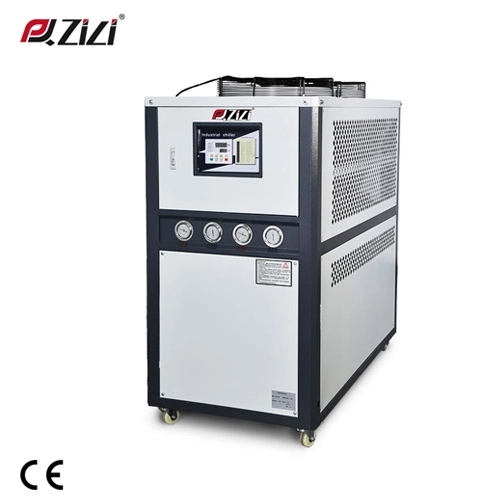
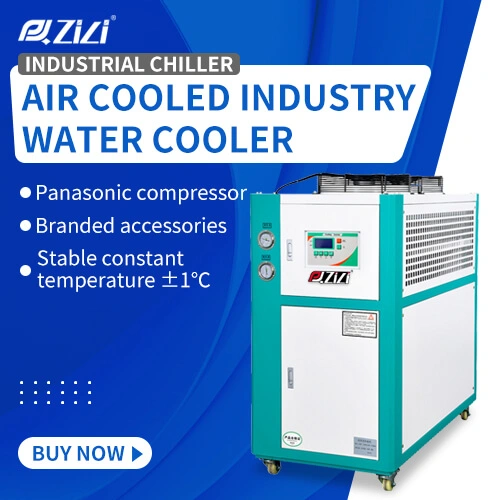
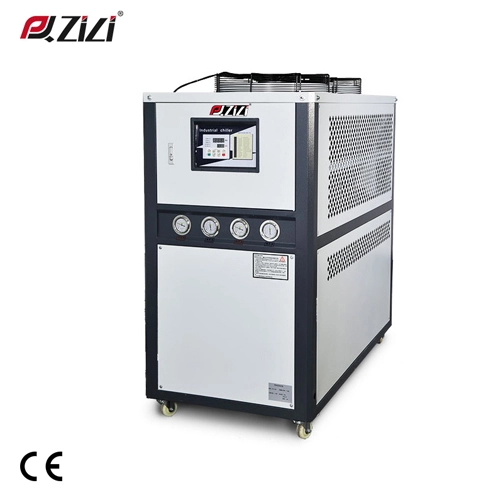
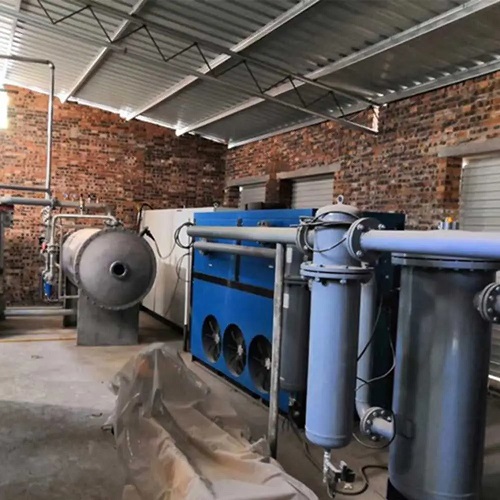
In today’s printing industry, whether it is traditional offset printing, flexographic printing, digital printing, or even UV curing technology, temperature control plays an extremely critical role. With the increase in production speed and higher demands for print quality, more and more printing companies are adopting industrial chillers (Printing Chiller / UV Curing Chiller) to ensure stable operation and consistently high-quality output.
This article provides an in-depth analysis of the role of chillers in printing and UV curing processes, as well as practical guidance on how to select the right chiller equipment.
During printing operations, heat is mainly generated from the following sources:
1.High-speed printing machines – friction and continuous mechanical operation generate heat;
2.UV lamps and UV LED curing devices – emit powerful ultraviolet energy accompanied by high temperatures.
Without effective cooling measures, the following problems may occur:
Ink color deviation and uneven drying;
Paper or film materials warping and deformation
UV lamp overheating and shortened lifespan;
Unstable machine operation or even unexpected downtime.
Here, the industrial water chiller for Printing becomes the most effective solution.
UV curing relies on high-energy ultraviolet light to quickly cure inks or coatings. Both traditional mercury UV lamps and modern UV LEDs generate a large amount of heat during operation.
If the temperature is too high:
The lifespan of UV lamps will be drastically reduced;
UV light intensity will decay, reducing curing efficiency;
LED chips may fail completely.
A UV Curing Chiller helps maintain the lamp or LED module at the optimal temperature range, ensuring efficient and stable curing performance.
By circulating temperature-controlled chilled water, the chiller keeps curing speeds uniform, avoiding issues such as:
Over-curing or under-curing in certain areas;
Uneven print surfaces;
Color shifts or poor adhesion.
UV lamps and LED modules cooled with chillers can last 30–50% longer;
Printing machine components are less likely to age under high temperatures;
Reduced downtime and maintenance, improving overall productivity.
When choosing a chiller for printing and UV curing applications, pay special attention to the following factors:
Cooling capacity – must match the power of the printing machine and UV lamp to prevent insufficient cooling.
Temperature stability – the printing industry typically requires water temperature fluctuation within ±0.5℃.
Eco-friendly refrigerants – compliant with environmental regulations, such as R-410A, R-407C, or R-32 with low GWP.
Configuration and installation – choose between air-cooled or water-cooled chillers depending on the workshop environment.
Ease of maintenance – simple cleaning of water tanks, filters, and heat exchangers ensures long-term stable operation.
For example:
UV LED Chillers usually require compact but highly precise cooling systems.
Large offset printing presses are better suited for high-capacity screw-type chillers.
After integrating chillers into their production lines, many printing companies report the following benefits:
Improved print quality – inks cure more evenly, colors remain more stable;
Cost savings – extended lifespan of UV lamps/LEDs reduces replacement frequency;
Increased productivity – fewer stoppages caused by overheating;
Energy efficiency – some chillers are designed with optimized energy-saving functions, reducing power consumption.
These advantages translate directly into stronger market competitiveness.
In printing and UV curing processes, chillers are not just auxiliary equipment—they are essential for ensuring stability, quality, and efficiency.
If you are looking for an industrial chiller designed for printing and UV curing, Pengqiang provides:
Multiple options, including air cooled chiller and water cooled chiller;
Customized cooling solutions for UV LEDs and mercury lamps;
Energy-efficient and environmentally compliant refrigeration systems.
Contact us today to get a custom chiller solution for your printing applications, and keep your production running efficiently and reliably.
 +86-178-1894-1386
  taylor_jiao@pqzili.com