Choosing between renting and buying an industrial chiller can have a major impact on project cost, production continuity, and long-term equipment strategy. For a permanent manufacturing line, purchasing may provide better value over years of operation. For a temporary project, seasonal demand, emergency replacement, or equipment trial, renting can reduce upfront investment and provide faster access to cooling capacity.
The decision becomes more complicated because industrial chillers vary significantly in size and configuration. A small 5HP chiller used for a compact process has very different economics from a large screw chiller serving a continuous production plant.
The U.S. Department of Energy recommends evaluating chiller efficiency from a life-cycle perspective because higher-efficiency equipment can justify a higher initial purchase price through energy savings over its operating life.
Renting gives a company temporary access to cooling equipment without purchasing the entire machine. Rental arrangements can be useful when cooling demand is uncertain or when the equipment is needed for a limited period. Depending on the supplier, the rental package may include transportation, installation support, maintenance, and equipment replacement. This can be particularly valuable when a production facility experiences an unexpected chiller failure. Instead of waiting weeks for a new machine, a rental unit can potentially provide temporary process cooling while the permanent system is repaired or replaced.
Businesses may consider renting when they need:
Emergency backup cooling
Temporary production capacity
Seasonal cooling
Cooling during equipment replacement
Temporary construction or commissioning
Short-term testing
Additional capacity during production peaks
However, rental pricing should not be evaluated only by the monthly fee. Transportation, installation, electrical work, piping, deposits, insurance, and other charges may also affect the total cost.

Buying an industrial chiller requires greater initial capital but gives the owner control over equipment configuration, operating schedule, maintenance, and future modifications.
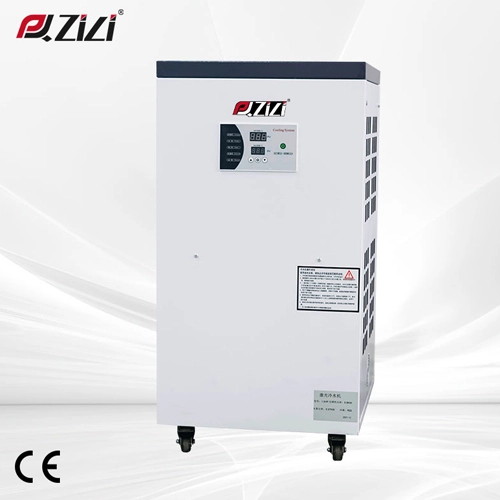
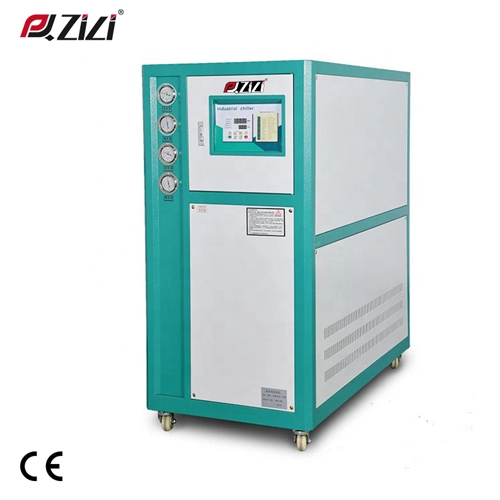
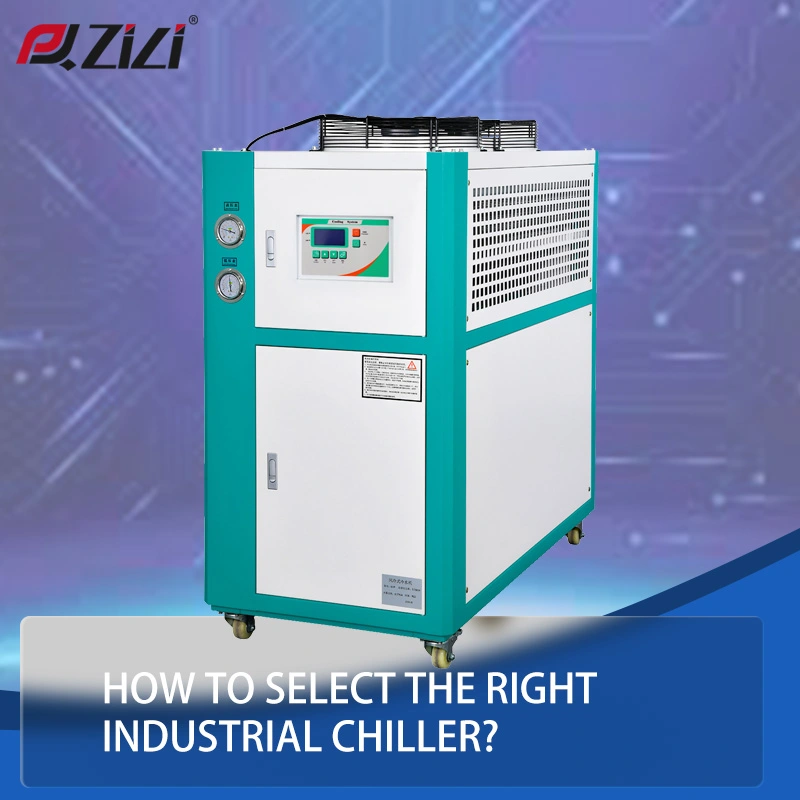
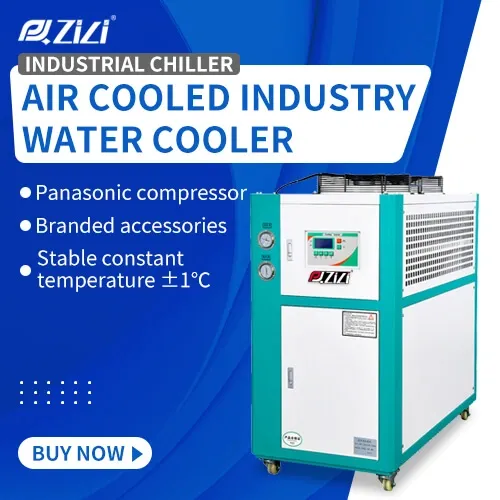
PQZILI's industrial chiller portfolio includes air-cooled, water-cooled, laser, screw, and customized chillers. The range includes air-cooled models from 1HP to 30HP and water-cooled models from 5HP to 40HP, while larger screw chiller systems are available for higher-capacity requirements.
Buying is generally more attractive when the equipment will remain in service for years rather than months.
Purchase becomes more attractive when:
Cooling is required year-round
The process is permanent
Production is expanding
The same cooling capacity is needed repeatedly
Long-term energy efficiency matters
The company wants complete equipment control
Customization is required
| Factor | Rent an Industrial Chiller | Buy an Industrial Chiller |
| Initial capital | Low | Higher |
| Ownership | No | Yes |
| Short-term flexibility | Excellent | Limited |
| Long-term economics | Can become expensive | Often more favorable |
| Emergency response | Excellent | Requires ownership of backup capacity |
| Customization | Usually limited | High |
| Asset value | None after rental | Retained by owner |
| Maintenance responsibility | Often shared with supplier | Owner/supplier dependent |
| Equipment availability | Depends on rental fleet | Controlled by buyer |
| Best application | Temporary or uncertain demand | Permanent production |
The most important variable is not simply purchase price versus rental price. It is how long the equipment will be used and how intensively it will operate.
If a company needs cooling for a three-month production project, purchasing a complete chiller may leave the business with an underutilized asset after the project ends.
Rental allows the company to match equipment use with project duration.
A process chiller failure can stop production and create losses that are much larger than the cost of temporary cooling.
A rental chiller can act as a contingency solution while a permanent machine is repaired.
This is especially relevant for processes that cannot tolerate unexpected temperature increases, such as laser processing, pharmaceutical production, food processing, and precision manufacturing.
Some factories experience substantial seasonal fluctuations. For example, a facility may require additional cooling during summer but have sufficient permanent capacity during the rest of the year. Renting supplemental equipment can prevent the company from purchasing capacity that sits idle for most of the year.
Rental can also reduce technical risk when a company is unsure which configuration is suitable. A manufacturer might test an air-cooled system before investing in a larger water cooled chiller, or evaluate a specific process temperature before purchasing a permanent machine.
If a production line will operate continuously for many years, rental fees can accumulate quickly. A purchased unit spreads its capital cost across a long operating period and becomes a company asset.
Operating hours strongly influence the economics of ownership. The DOE explains that chiller efficiency should be evaluated under both full-load and part-load conditions because real systems do not necessarily operate at maximum capacity continuously. For a high-utilization factory, selecting an efficient permanent system can therefore have a significant effect on lifetime energy costs.
Some applications cannot be served effectively by standard rental equipment. PQZILI offers a custom industrial chiller range for applications requiring special temperature control, compressor stability, corrosion resistance, or other specific design requirements.
A customized system is generally more logically purchased because its configuration is designed around a specific process rather than temporary use.
The rent-versus-buy decision also depends on the technology.
An air-cooled system can be attractive where installation simplicity and reduced infrastructure are important. PQZILI notes that its air-cooled chillers do not require a cooling tower and are available in multiple capacities. This can make an air-cooled system practical for temporary or permanent facilities where water infrastructure is limited.
A water-cooled system requires connection to a cooling tower and circulating water system. PQZILI offers water-cooled models from 5HP through 40HP, as well as larger screw water-cooled solutions. Because installation involves additional infrastructure, purchasing may make more sense when the facility has a permanent cooling-water system.
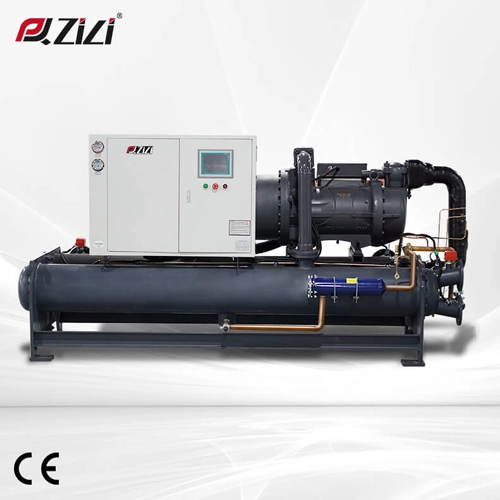
Screw chillers are intended for larger cooling requirements and production environments. PQZILI provides both air-cooled and water-cooled screw chillers and describes them as suitable for large-scale production lines.
For a short-term project, renting a large screw system can avoid a substantial capital commitment. For permanent high-load operation, purchasing may provide better long-term economics. Chiller selection should also account for the operating environment, heat rejection method, load profile, and system design. ASHRAE guidance provides detailed information on HVAC system and equipment selection, performance, and application considerations.
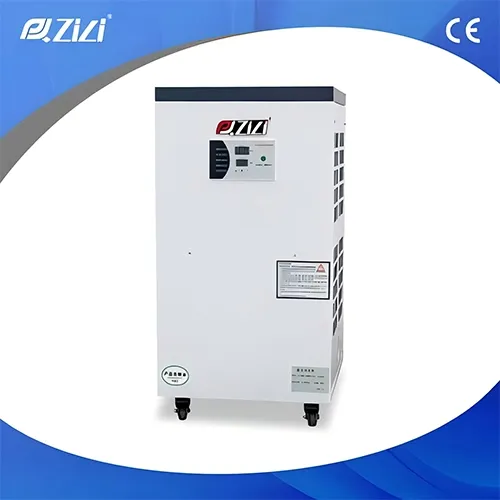
Not every industrial chiller is selected simply according to cooling tonnage. A laser chiller supplier, for example, needs to consider the thermal requirements of laser equipment. PQZILI offers dedicated laser chillers in several compact capacities, including 0.6L, 0.8L, 1L, 2L, 1.2L, and 1.5L models. Similarly, applications involving dairy, pharmaceuticals, glycol cooling, electronics, plastics, and food and beverage production may have different temperature-control requirements. PQZILI identifies dairy, pharma, laser, glycol, electronics, rubber and plastics, and food and beverage among its industrial chiller applications. For these applications, the decision should consider process risk as well as equipment cost.
A practical evaluation can use five questions:
How long will the chiller be required?
How many operating hours are expected each year?
Is cooling demand stable or temporary?
Does the process require customized equipment?
What happens financially if cooling fails?
The first four questions determine the economic case. The fifth determines the operational risk. For example, a pharmaceutical process may justify owning a dedicated system even when the simple rental calculation appears attractive because production interruption could be extremely costly.
A useful comparison should include:
Rental cost = rental fees + transportation + installation + energy + additional service charges
Ownership cost = purchase price + installation + energy + maintenance + spare parts + financing/depreciation
The DOE's chiller purchasing guidance specifically recommends considering life-cycle cost effectiveness rather than looking only at the initial purchase price. Its analysis shows that higher-efficiency chillers can generate substantial lifetime energy savings.
Therefore, a lower-priced chiller is not necessarily the lowest-cost option over its useful life.
| Situation | Recommended Option | Reason |
| Emergency replacement | Rent | Fast temporary capacity |
| 1–3 month project | Rent | Avoid underused asset |
| Seasonal demand | Usually rent | Capacity needed only periodically |
| Equipment trial | Rent | Reduce technical risk |
| Permanent production line | Buy | Better long-term asset utilization |
| 24/7 operation | Buy | Long-term energy economics |
| Highly customized process | Buy | Equipment can be designed around the process |
| Expansion with uncertain demand | Rent first | Validate actual cooling requirement |
| Large permanent factory | Buy | Long-term infrastructure investment |
| Backup-only requirement | Rent or service contract | Avoid idle capital |
Whether renting or purchasing, supplier capability remains important. A reliable screw chiller manufacturer, or general industrial chiller supplier should be able to provide accurate cooling calculations, equipment specifications, installation guidance, spare parts, and after-sales support. For companies looking for water cooled screw chiller suppliers, or a wholesale process chiller, the supplier should also be able to explain operating conditions and lifecycle costs rather than simply quoting a machine price. The same principle applies when evaluating ethylene glycol chiller systems or pharmaceutical chillers, where process requirements can be more important than nominal capacity.
Renting is most suitable when cooling is temporary, uncertain, seasonal, or urgently required. It provides flexibility and reduces upfront capital expenditure.
Buying is generally more appropriate when the chiller will support permanent production, operate frequently, or require customization.
For companies comparing industrial chiller for sale options, the decision should ultimately be based on total cost of ownership, utilization rate, process risk, infrastructure, and expected service life.
A company planning permanent production may benefit from working directly with a screw chiller manufacturer or custom industrial chiller supplier to specify a system around its actual process. A company facing a short-term cooling requirement may instead find rental more financially and operationally practical.
The right question is therefore not simply “Is renting cheaper than buying?” It is:
“Which option delivers the lowest total cost and lowest operational risk for the expected life of the cooling requirement?”
Renting can be cheaper for short-term, seasonal, or emergency applications. Buying is generally more economical when a chiller is required continuously for many years.
Consider renting for temporary projects, emergency replacement, seasonal demand, production trials, or uncertain future cooling requirements.
Buying is usually more appropriate for permanent production, high annual operating hours, stable cooling demand, and customized applications.
Yes, large screw chillers can be rented in some markets, particularly for temporary high-capacity cooling. Availability depends on the rental supplier and required specifications.
A 5HP chiller can be suitable for smaller process-cooling applications. PQZILI offers both 5HP air-cooled and 5HP water-cooled chiller models, but the final selection should be based on the actual cooling load.
For permanent pharmaceutical production, purchasing a properly specified system is often more appropriate. Rental can be useful as emergency backup or during temporary capacity shortages.
Ask about cooling capacity, temperature stability, flow rate, compatibility with the laser, operating environment, alarms, maintenance, and response time for service.
A custom industrial chiller can be designed around unusual temperature ranges, fluids, installation limitations, corrosion requirements, or process conditions that standard equipment may not accommodate.
Chiller Selection Guide: Common Mistakes and How to Avoid Them
Application And Differences Of Refrigerants R410a And R134a In Chillers
Differences And Application Scenarios Between Small Chillers And Large Chillers
 +86-178-1894-1386
  taylor_jiao@pqzili.com