A warehouse can feel comfortable before the first delivery and noticeably warmer once loading begins. The air conditioner may be operating on the same settings, yet the conditions around it have changed. Open doors connect the building to outdoor air, while loading activity changes which spaces are occupied and how they are used.
Warehouse loading dock cooling starts with understanding that pattern. Before choosing more equipment, identify when doors remain open, where incoming air travels, and which working areas need cooling most.
When outdoor air is warmer than the conditioned space, air entering through an open dock can add heat. Moisture can add a further cooling burden in humid conditions. ASHRAE treats infiltration and moisture entry as contributors to building cooling loads.[1]
This does not mean every open door introduces a fixed amount of heat. Door dimensions, weather, pressure differences, and the indoor conditions all matter. A count of vehicle arrivals cannot, on its own, establish the required cooling capacity.
Two docks may handle the same number of deliveries but operate very differently. One door closes between vehicles; the other stays open while staff wait for paperwork or prepare the next load.
A practical starting point is to note opening and closing times during a representative shift. Separate active loading from waiting time. This reveals which openings are necessary for the operation and which may be avoidable, without pretending to calculate an exact heat load.
Use a simple observation log with the bay identifier, the start and finish of each opening period, and the activity taking place. Add a short note when a door remains open without loading. Avoid recording only the busiest hour and treating it as representative of the whole shift.
This log is an operational record, not a cooling-load calculation. Its value is in exposing patterns that can be discussed with warehouse staff. For example, repeated waiting periods may call for a different door-opening routine, while continuous loading may leave little opportunity to reduce opening time. Those are different situations even if both generate complaints about heat.

Look beyond the dock threshold. Is the loading area open to a packing line, a dispatch desk, or the main storage aisles? A workstation several metres inside may still be exposed to the same air exchange.
On a simple floor plan, mark the external doors and the internal openings connecting these areas. Then mark where staff report discomfort. This suggested observation exercise helps define the problem more clearly than describing the entire building as “too hot.”
Include existing ventilation and extraction arrangements in the review. Exhaust systems remove air, and replacement air must enter somewhere. An open loading door can become part of that route.
Do not change required ventilation to improve cooling. Instead, note whether complaints coincide with particular fans, doors, or production activities. The aim is to give the person assessing the building a clearer account of what happens during normal work.
Walk the route from the dock to the affected work area during normal activity. Note whether internal doors are open, whether temporary stock changes the route, and whether staff move between several stations. A layout sketch should distinguish permanent partitions from temporary arrangements that change during the day.
Use the sketch to ask a specific question: is the complaint concentrated beside the opening, or does it follow a connected route farther into the building? The answer helps define the area that deserves closer assessment. It does not, by itself, establish airflow direction at every moment or justify moving cooling equipment without checking the wider arrangement.
Review the sequence from vehicle arrival to departure. Can preparation take place before the door opens? Is the door left open after loading has finished? Who is responsible for closing it when the bay becomes idle?
These questions often expose operational gaps worth addressing. Any revised procedure must still suit vehicle movements, visibility, pedestrian access, and the site's working arrangements. A cooling measure that disrupts loading is unlikely to remain in use.
Check the visible condition of existing door seals and the fit around docked vehicles. WBDG's warehouse guidance identifies dock sealing and infiltration control as relevant design measures, while also emphasising proper ventilation.[2]
Where internal doors or partitions already separate the dock from occupied spaces, check whether they are used as intended. Adding or changing separation requires a wider review of traffic and access; it should not be treated as a universal solution or assigned an unsupported energy-saving percentage.
It can help to organise proposed measures into two groups. The first concerns how existing facilities are used: opening doors when a bay is ready, closing them when it is idle, and keeping existing internal separation in normal use. The second concerns physical changes, such as repairing seals or altering the arrangement of a working area. Keep responsibility for each action clear.
Discuss the first group with the people who run the loading process. A procedure that appears sensible from an office may conflict with vehicle sequencing or the time needed to prepare a shipment. Record the reason when a door must remain open; that condition belongs in the cooling assessment rather than being ignored.
For physical changes, review the whole route used by people and goods. A new barrier should not create an awkward crossing or obstruct an existing access route. The article's purpose is to identify decisions worth examining, not to prescribe a particular door, curtain, or dock-seal product for every warehouse.

A loading threshold used briefly by moving staff has a different operating pattern from a packing station occupied throughout the shift. Use the following table as a discussion framework, not as a prescribed system design.
Area | What to observe | Question to resolve |
Loading threshold | Door-open periods and time people spend there | Can unnecessary exposure be reduced within the loading process? |
Adjacent packing or checking station | Continuous occupancy and its connection to the dock | Does this working area need a more clearly defined cooling priority? |
Internal storage area | Goods requirements, staff activity, and internal openings | Is the objective staff comfort, a storage condition, or both? |
Write the objective in plain terms before discussing an industrial air conditioner: which area needs cooling, when it is occupied, and how loading changes its conditions.
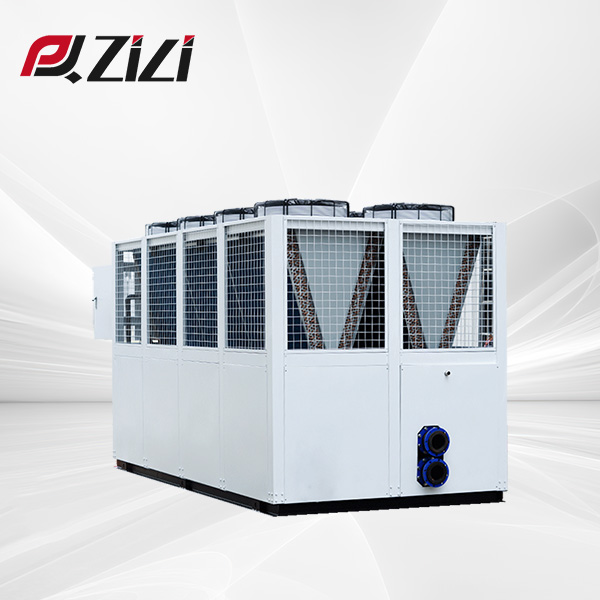
PQZILI's warehouse cooling page provides an application overview. A specific dock still needs to be considered in its own layout and operating context. General application suitability does not determine the number or capacity of units required.
Before comparing equipment options, write a short statement of the priority area. For example: “The checking station beside Bay A is continuously occupied during dispatch, while the threshold is used mainly for passing loads.” This is an illustrative description, not a customer case. It gives a more useful starting point than asking to cool a warehouse of a stated floor area without further context.
Keep staff comfort and product storage requirements separate in that statement. A local comfort problem does not establish the conditions required by stored goods, and a product requirement should not be inferred from how the space feels to an operator. Each objective needs to be identified in its own terms.
After an operational change, repeat the observations during a comparable loading period. Note whether doors are still being left open unnecessarily and whether the reported problem has moved or remained in the same place. Treat the result as feedback on the working arrangement, not as a measured energy-saving claim or proof of a particular air conditioner's performance.
Door opening may introduce warmer outdoor air and connect the dock more directly to neighbouring spaces. Note the timing and location of the change rather than assuming an equipment fault.
Not necessarily. Additional capacity does not remove the underlying air-exchange issue. Review the loading pattern and cooling objective before changing equipment.
Yes. Their occupancy and storage requirements may differ. That distinction helps define the task, but does not automatically require separate systems.
1. ASHRAE. Nonresidential cooling and heating load calculations. In: 2025 ASHRAE Handbook—Fundamentals. Chapter 18 [Internet]. [cited 2026 Oct 21]. Available from: https://handbook.ashrae.org/Handbooks/F25/IP/F25_Ch18/F25_Ch18_ip.aspx
2. Whole Building Design Guide. Warehouse [Internet]. [cited 2026 Oct 21]. Available from: https://legacy.wbdg.org/building-types/warehouse
 +86-178-1894-1386
 taylor_jiao@pqzili.com